
Understanding Gas Types and Cylinder Options
Differences Between LPG, Butane, and Propane
One faulty seal can empty a nine kilogram cylinder in just three days, a silent cost many Port Elizabeth residents never trace back to gas type or cylinder condition. Butane, propane, and LPG are not interchangeable, and coastal weather shifts how each performs.
Propane burns at high pressure, ideal for quick heating, but it requires a sturdy regulator. Butane loses volatility in cooler evenings, leading to weak flames. LPG, typically a blend, balances both, yet its moisture content attracts condensation in humid air.
Before you request a gas refill Port Elizabeth, understand what your appliance tolerates:
- Propane: best for outdoor burners and industrial loads in winter.
- Butane: economical for indoor stoves, but fails below ten degrees.
- LPG: versatile for South African homes, yet inspect rubber hoses for cracks.
Steel cylinders rust faster than aluminum when exposed to salty sea breezes, so many locals choose lightweight aluminum for portability. A proper gas refill Port Elizabeth includes checking the O ring and valve threads alongside the actual refill.
Selecting the Right Cylinder Size for Your Needs
A nine kilogram cylinder weighs twelve kilograms when filled, a fact that registers when you carry it upstairs. Steel cylinders dominate Port Elizabeth because they cost less, but I find their weight becomes a daily annoyance. Aluminum cylinders cost more and still corrode around the valve if neglected.
Selecting the right cylinder size starts with your consumption pattern. A single burner used twice daily drains a nine kilogram cylinder in roughly a month and a half. A household running a geyser through winter needs fourteen or nineteen kilograms to avoid midweek shortages. Planning a gas refill Port Elizabeth means hauling the cylinder to the shop, so size affects your routine directly.
- Nine kilograms suit small flats and weekend cooking.
- Fourteen kilograms cover moderate family use.
- Nineteen kilograms serve larger homes or braai areas.
Every gas refill Port Elizabeth should include checking the cylinder’s test date and valve condition before you pay. A corroded collar negates any savings from bulk buying.
New Cylinder Purchases vs. Refilling Existing Bottles
Every gas cylinder whispers its history before a gas refill Port Elizabeth transaction begins. The collar stamp records the tare weight, the test date, and the manufacturer. I always read these figures before committing to a swap. New cylinder purchases offer pristine certification and a twelve year lifespan. Refilling existing bottles saves money but demands vigilance. Consider three details during inspection:
- Valve stem for cracks
- Collar for corrosion
- Test date for expiry
A cylinder past its hydrostatic test is a ticking hazard, not a bargain. Gas types also matter. A butane cylinder with a left handed thread fits differently than propane with a right handed thread. Matching your regulator to the gas type prevents leaks and flame instability. For a reliable gas refill Port Elizabeth, verify the supplier’s purging process removes residual moisture. A clean cylinder performs better than a new one with water inside.
Certified Gas Brands and Quality Considerations
A single contaminated batch of LPG can ruin a regulator in hours. That is why I track the source before any gas refill Port Elizabeth transaction. Certified brands in South Africa carry SABS approval or a valid NRCS letter of authority. These marks mean the gas meets strict compositional limits. Look for them on the cylinder collar or supplier documentation.
Cylinder options go beyond size. Aluminum bottles resist corrosion better than steel, though they cost more. Valve types also differ; a POL valve requires a washer, while a quick connect coupling seals without one. Both work, but only if the O ring is intact.
Here is what I verify before trusting a supplier:
- The brand name matches the certified entity
- The batch number links to a test certificate
- The cylinder shows no signs of reconditioning by an unlicensed shop
Where to Refill Gas Bottles in Port Elizabeth
Authorised Distribution Centres and Depots
Scouting a proper gas refill Port Elizabeth is less about convenience and more about authorisation. The city’s distribution centres and depots follow strict inspection protocols. They check your cylinder’s condition, tare weight, and valve integrity before filling.
These authorised facilities vary from industrial yards to compact retail depots. Some operate independently, others sit inside established gas equipment shops.
- Look for visible licence signage.
- Ask for a receipt indicating gas weight.
- Confirm they use an electronic filling scale.
A correct depot rejects unsafe bottles on the spot. You leave with a sealed, weighed, and properly certified product.
Retail Store Partners and Exchange Points
Retail store partners in Port Elizabeth provide a distinct route for gas refill Port Elizabeth. These exchange points operate inside supermarkets, hardware chains, and standalone gas equipment shops. You hand over an empty cylinder and receive a pre-filled, sealed unit immediately.
- Inspect the valve seal before accepting the exchange bottle.
- Verify the tare weight stamped on the collar matches the actual weight.
- Ask to see the retailer’s licence if it isn’t displayed.
Stock rotates frequently in these outlets, so aged cylinders are rare. Certified brands only. The exchange model suits households that lack a spare bottle, since you never leave without a full cylinder.
Mobile Refill Services and Home Delivery
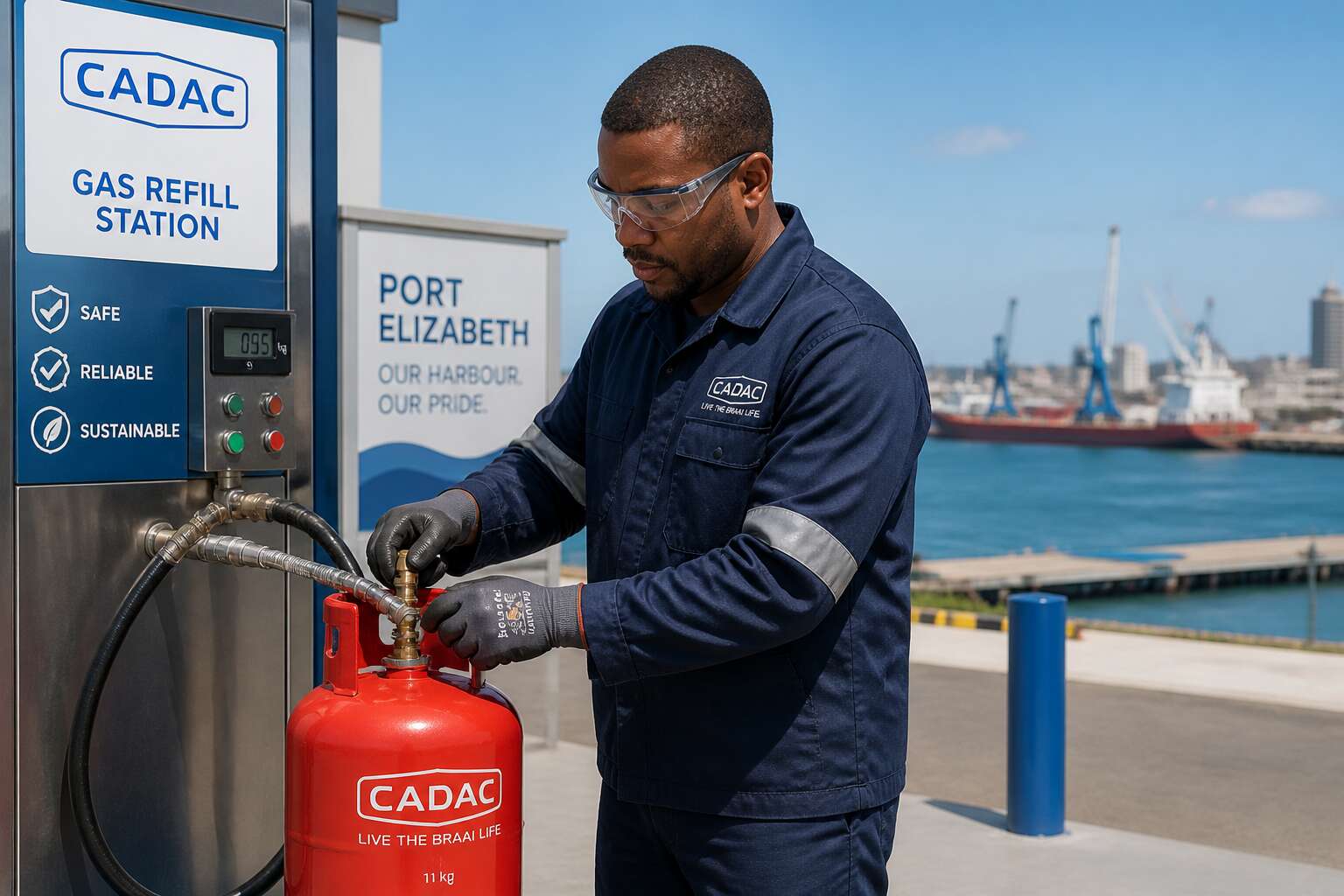
Port Elizabeth residents often hear the low hum of a compressor before they spot the truck. Mobile refill services bring LPG directly to the property, eliminating the round trip to a depot. Technicians connect a hose from the tanker to your stationary cylinder and fill it on site, verifying the tare weight and valve condition as they work.
These services suit homes and businesses with permanent installations. Delivery schedules vary by suburb, and operators typically require a booking slot days in advance. Home delivery offers a different convenience. A courier collects the empty bottle and returns a full one within 24 hours, which helps households without transport.
For gas refill Port Elizabeth, both routes reduce the burden of cylinder ownership. Neither replaces the safety checks you should perform yourself, but both offer flexibility that fixed depots cannot match. For gas refill Port Elizabeth, this is a meaningful shift in household logistics.
Emergency Refill Options and 24-Hour Stations
When the flame sputters mid-dinner, the available options narrow quickly. Port Elizabeth has a few 24 hour depots for those who measure convenience in minutes. The attendant checks the test date, confirms the tare weight, and sets the pump running while you watch the gauge.
Most emergency stations sit along major routes, so a late night run need not become a neighbourhood tour. Expect a modest surcharge. A quick phone call prevents the disappointment of a lit forecourt with a compressor under service.
For gas refill Port Elizabeth, the practicalities at an emergency depot include:
- A valve adaptor for non-standard fittings.
- Card payment availability, which can fail after hours.
- A receipt stating the exact kilogrammes filled.
The 24 hour option answers with the same accuracy as daytime stations, just at a higher price.
Navigating Business Hours and Peak Times
Someone once told me the best time for a gas refill Port Elizabeth is the moment you think about it, not when the flame dies. That’s optimistic. In reality, the lunch rush means a long wait at the counter.
Most depots open at 8:00 and close by 17:00. The queue hits its peak right after the school run and again during the 16:30 exodus. If you can slip in between 10:30 and 11:15, you’ll find the forecourt nearly empty.
Here is the unwritten schedule that guides local behaviour:
- Tuesday mornings are the quietest. Monday has the weekend backlog.
- Thursday afternoons are surprisingly brisk, since everyone preps for the weekend braai.
Weekend mornings are unpredictable for gas refill Port Elizabeth. The 8:00 sharp crowd is patient, but the 9:30 crowd is not. The ones who leave before 10:00 usually keep their sanity intact.
Costs, Deposits, and Saving Money on Refills
Average Refill Prices by Cylinder Size
For a gas refill Port Elizabeth residents have plenty of options, but the true cost is another matter. The refill price is only half the story. The deposit on the cylinder often exceeds the refill cost, especially for those who bought a new bottle without examining the terms. Industry averages show a 9kg refill runs between R250 and R320, a 14kg unit costs roughly R380 to R450, and the 19kg bottle can set you back R520 or more.
- 9kg cylinder: R250 to R320
- 14kg cylinder: R380 to R450
- 19kg cylinder: R520 to R600
Deposits vary by supplier, but I have seen households pay R700 for a bottle that carries a R300 deposit at the next depot. Refundable only if the cylinder remains in good condition, that fee quietly inflates the true cost. Those who return bottles with dents or rust receive noticeably less back. The clever saver compares these figures with the going rate for a gas refill Port Elizabeth residents actually pay, because the deposit is where the margin grows.
Understanding Deposit and Rental Structures
Deposits are where the cost hides, and people rarely dig deep enough! The advertised price for a gas refill Port Elizabeth rarely reflects the total commitment, as the deposit structure forms a contract most consumers ignore. I have seen households pay R700 for a cylinder carrying a R300 refund.
Rental agreements differ from deposits. A rental is a recurring fee; a deposit is collateral held against damage. Refunds hinge on inspection. A dent, a cracked valve, or a faded serial number renders collateral worthless.
– Scratches that fail the hydrostatic test
– Valve threads stripped by over-tightening
– Decals removed by cleaning agents
Savings emerge when you protect the refundable value of your bottle. Photograph the cylinder before accepting it, and ask for the depreciation schedule. Treat the deposit as a recoverable asset, and the actual cost of a gas refill Port Elizabeth drops because you stop losing money on the return cycle.
Tips for Reducing Gas Consumption and Refill Frequency
The real cost of a gas refill Port Elizabeth shows up in your usage habits, not the till slip. Most households burn through a 9kg cylinder in six weeks because the flame is too high for the pot size. That is money leaking daily.
Deposits already locked away capital. You cannot recover that money by using gas faster, so consumption is the only variable you control. Check the flame colour! A blue flame means efficient combustion. A yellow flame means wasted gas and sooty pots.
- Match the burner to the pot diameter.
- Boil water with the lid on.
- Turn off the gas while you prepare ingredients.
Cutting boil time by five minutes a day gives you nearly a week of extra cooking time on the same cylinder. That reduces how often you need a gas refill Port Elizabeth, and the saving compounds with every cycle.
Safety, Handling, and Legal Rules for Gas Refills
Performing a Pre-Refill Visual Inspection
A cylinder that looks fine from a distance can hide cracks up close. That’s why every gas refill Port Elizabeth begins with a pre-refill visual inspection. This isn’t bureaucratic fussiness. It’s a practical barrier between you and an unplanned barbecue indoors.
What should you look for? Simple:
- Dents, rust, or bulging on the cylinder body
- Damage or corrosion around the valve
- A missing or cracked rubber O-ring
- Any signs of leaks, like a hissing sound or strong gas smell
Legally, South African standards mandate that trained staff conduct this check before any refill. They’ll refuse a cylinder with deep gouges or a bent valve. That’s not rudeness, it’s the law. Handling rules matter too. Never drag cylinders, and keep them upright during transport. For a safe gas refill Port Elizabeth, this inspection matters most.
Safe Transport and Vehicle Rules for Cylinders
The inspection is finished, the cylinder is full, but the most dangerous part of your gas refill Port Elizabeth trip may be the drive home. South African regulations, specifically the SANS 10087 series, apply equally whether you carry one cylinder or a full payload.
The common failures we observe at refill stations:
- Cylinders placed horizontally instead of upright.
- Valves left unprotected during transit.
- Cylinders rattling against metal tools or other cargo.
- Windows closed tightly, trapping any slow leak.
Each failure creates a condition where pressure, friction or heat might damage the valve. A cylinder inside a hot car in a Port Elizabeth summer reaches extreme internal pressure! That is why transport rules matter as much as the gas refill Port Elizabeth procedure itself.
Correct Storage Methods for Filled Bottles
After the gas refill Port Elizabeth, the cylinder becomes a pressure vessel inside your home. The SANS 10087 series sets legal rules for where it may rest. A filled bottle must stand upright on a level, stable surface. Lying it down risks liquid entering the regulator.
Airflow matters more than most people assume. Storing filled bottles in a sealed cabinet can trap escaping vapour. The better position is outdoors or in a ventilated spot. Keep the valve cap on and the regulator off until you connect it again.
These correct storage methods apply every time:
- Cylinders clear of direct sunlight and heat sources
- A minimum of one metre between the cylinder and any flame
- Valves positioned away from drain openings and basements
These handling rules protect your household. Each gas refill Port Elizabeth demands the same respect for pressure and flammability.
Avoiding Illegal Filling and Tampered Equipment
Illegal filling operations often use stolen or untested cylinders. These outfits skip the hydrostatic testing that certified depots perform after every gas refill Port Elizabeth. A tampered valve can leak odourant, leaving your kitchen smelling faintly of gas without an obvious source.
Legal refill stations reject cylinders with dents, rust, or outdated test dates. They record each bottle’s serial number. If a seller ignores these checks, walk away.
- Check the valve seal for cracks before accepting a cylinder
- Confirm the depot stamps the next test date on the collar
- Report suspicious pricing to the local energy regulator
Handling a filled cylinder correctly reduces risk. Always cap the valve after transport. Never store a bottle near a flame. The legal rules exist because pressure and fire behave unpredictably, and a gas refill Port Elizabeth is only safe when the equipment and the handler both follow the rules.
Important Certifications to Look For
Certifications are discernible proof that a depot follows the law. When you arrange a gas refill Port Elizabeth, the SABS approval and the technician’s registration carry more weight than any brand sticker.
Look for the verification marks that indicate legitimate handling:
– The SABS mark on the cylinder shoulder
– The current hydrostatic test date stamped on the collar
– The depot’s permit number displayed at the counter
These credentials separate compliant depots from casual operators. A certified facility records every cylinder’s serial number and rejects bottles that fail inspection. The legal rules governing LPG exist because pressure and fire behave unpredictably. Certifications are simply the evidence that everyone involved respects that unpredictability.
What to Do If You Suspect a Gas Leak
Suppose you walk into your kitchen and smell that distinctive rotten egg odour, the one that means mercaptan has flagged a leak. Your gas refill Port Elizabeth was done properly, but connections loosen, hoses perish, and valves fail. The law is blunt about what comes next.
Do not switch on lights, do not use your phone, do not light a match. Open doors and windows, leave the building, and call your depot from outside. Every cylinder has a valve that can be closed, assuming you can reach it without risk.
- Turn off the appliance, not the cylinder, if the flame has gone out.
- Soapy water finds leaks better than your nose ever will.
- Report persistent odours to the fire department immediately.
Legal rules exist because LPG behaves badly when ignored. A certified technician must inspect the system before any supply is restored. The gas refill Port Elizabeth depot that filled your cylinder will advise on the required steps, but the responsibility to act safely rests with you.


0 Comments