
Gas Cylinder Fundamentals and Determining When a Refill Is Needed
Common cylinder sizes and types used for outdoor grilling
Any seasoned braai master knows the fire, but the cylinder under the grill rarely gets a second glance. South African outdoor setups typically rely on three standard steel sizes:
- 9kg: portable and perfect for the round kettle braai or a coastal weekend.
- 19kg: a solid upgrade for large gatherings and long entertaining sessions.
- 48kg: the stationary choice for permanent outdoor kitchens and heavy use.
Timing a braai gas refill requires attention rather than guesswork. Run warm water over the cylinder; the cool band of condensation traces the fuel level. The tare mass stamped on the collar reveals the empty weight, and a bathroom scale settles the matter with certainty.
Simple methods for checking remaining gas levels
A full cylinder behaves identically to a nearly empty one until the final moments. A braai gas refill often comes too late because grill owners trust pressure gauges, which measure vapour, not fuel. Inside the steel shell, gas sits as a liquid and boils off slowly. The gauge stays constant until the liquid is gone, then drops. A scale is more reliable.
To determine when a braai gas refill is required, I rely on these simple checks:
- Pour warm water down the cylinder. A cool band forms where liquid remains; a low band means a near-empty tank.
- Read the tare mass stamped on the collar. Weigh the cylinder on a bathroom scale, then subtract the tare from the total.
- Open the valve slightly and listen. A hiss that fades quickly signals low vapour.
Distinct signs that your supply is running low
A 9 kg cylinder holds roughly 9 kg of liquid fuel, yet its pressure gauge reads nearly identical from first ignition to final sputter. The LPG rests as liquid, boiling into vapour only when you open the valve. The regulator measures that vapour, which holds steady until the liquid is almost exhausted. A braai gas refill therefore sneaks up on anyone who trusts pressure readings alone.
Distinct signs appear at the burner level. The flame turns orange and lazy, the grill takes longer to reach heat, and the valve hiss becomes a rhythmic gurgle. These signals say the liquid is nearly spent.
- Orange or yellow flames instead of crisp blue
- Burners cannot hold high heat for more than a few minutes
- Sudden soot forming on the grates
The importance of certification and expiration dates
Two things determine whether a cylinder is safe for a braai gas refill: its structural integrity and its certification stamp. That certification is not a formality. It documents the last official inspection of the cylinder’s shell, valve, and welding. South African regulations require periodic testing to confirm the vessel can withstand the pressures of daily use and the heat of a South African summer. A cylinder without a valid test date is a gamble, and the odds are not in your favour.
The expiration date is etched into the collar, but many people confuse it with the manufacturing date. The test date is what matters. A certified cylinder has been hydraulically tested for leaks and checked for internal corrosion. The service provider performing your braai gas refill should refuse to fill an uncertified cylinder. If they do not, that is a warning sign about the operation’s standards. When you hand over your cylinder, glance at that collar. The process of getting a refill is also an inspection of your equipment. The date is the only concrete proof you have that the vessel holding a flammable liquid under pressure is still fit for service. An expired cylinder is not a conversation starter; it is a liability parked next to your grill. A professional braai gas refill near you will have the authority to condemn a cylinder, so respect that process.
Clearing up widespread myths about empty cylinders
Most people treat a cylinder like a trusted old friend, only to discover it has been silently plotting against them. The fundamental rule of gas cylinders is simple: the vessel never lies, but it also never volunteers information. You have to ask the right questions. A cylinder that feels heavy might still be empty, while a light one could be harbouring enough gas to ruin your Sunday lunch. The only reliable method is weighing, and the tare weight stamped on the neck tells you exactly what the empty cylinder should weigh. Anything above that is gas, pure and simple.
Shaking the cylinder to hear a slosh is about as accurate as predicting the weather with a broken barometer. The sloshing sound you hear is not gas, it is liquefied petroleum moving around, but the amount of movement tells you nothing about the remaining volume. The thermal expansion of gas means a cool morning can produce a faint slosh in a nearly empty cylinder, while a hot afternoon can silence a full one entirely. Your ears are useless instruments here.
A wiser habit involves hot water. Pour warm water down the side of the cylinder and feel for temperature changes. The gas level leaves a distinct cool line where liquid has been absorbing heat. That line is your honest gauge, and it works reliably every time. But even this method fails if you have been storing the cylinder in direct sunlight, which flattens the temperature differential and leaves you guessing.
- If your flame has turned from blue to orange, your regulators are weeping.
- If the burner produces soot on your pot, the gas mixture is wrong.
- If the cylinder hisses when you open the valve fully, you have a leak.
- If you smell gas near the valve, take the cylinder outside immediately.
The inconvenient truth is that a braai gas refill should happen before the cylinder runs completely dry, not after. Empty cylinders draw in moisture and air when the valve is open, contaminating the internal surface and inviting corrosion. That moisture wreaks havoc inside the vessel, creating rust particles that will later clog your burner jets. A cylinder that regularly runs dry wears out faster, and the cost of a replacement is significantly higher than the price of a timely refill. Treat the near empty state as a signal, not an emergency.
Preparing Your Cylinder for a Hassle-Free Refilling Session
Safely disconnecting the regulator and inspecting hoses
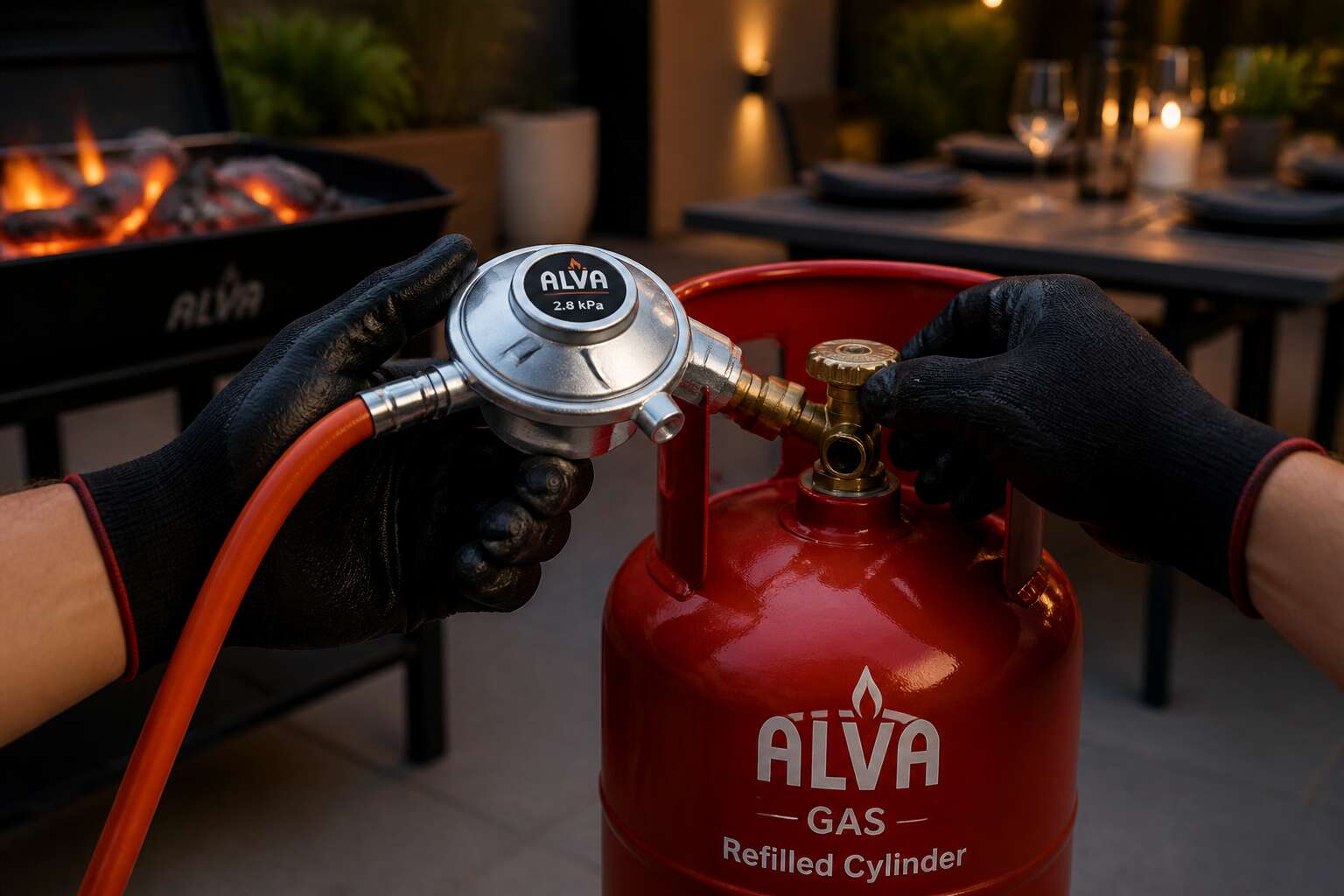
Your gas cylinder is not a loyal pet, it is a pressurised workhorse. Close the valve fully before touching the regulator. Then loosen the union nut with a proper spanner, never force it. A stubborn connection often means a damaged thread.
Inspect the hoses as if your braai depends on it, because it does. Run your fingers along the rubber and check for surface cracks or brittleness. Rubbery grime is harmless, but a hard spot may signal perished material.
The correct sequence before a braai gas refill is simple:
- Close the valve completely.
- Use a crescent spanner.
- Store the cylinder upright.
A secure connection leaves the outlet ready for the gas attendant. That simple discipline prevents leaks and keeps your next braai gas refill outing efficient.
What to check before loading the bottle into your car
A concerning number of refill appointments are delayed by simple oversights at home. The journey to your gas supplier begins before you even start the engine. This preparation is the quiet ceremony that separates a smooth transaction from a frustrating afternoon.
Your cylinder needs to be travel ready. A loose valve in a moving vehicle invites pressure and friction to do their worst. Take a moment to confirm the valve is entirely closed, turning the handwheel clockwise until it stops. There should be no resistance, just a firm stop. Then, place the cylinder in your boot with the valve facing upward and secure it against the side of the vehicle. A propped-up tyre or a sandbag can work wonders.
Before loading, give the cylinder a once over. You are looking for foreign matter or grime around the connection point. A clean valve face ensures the attendant can fit their equipment without arguement.
– Inspect the base of the cylinder for significant dents or rust.
– Check that the safety cap is present and fits snugly over the valve.
– Ensure the cylinder is upright and stable.
The short drive to the depot becomes a simple errand when the bottle is clean and upright. A considered approach to this task means your braai gas refill is handled with speed and safety. You return home with a full bottle, ready for the flames, and the knowledge that the hard work was done before you left the driveway.
Required documentation, deposits, and bottle labels
Almost a third of depot visits stall at the counter because the owner forgot their proof of purchase. I have seen this happen more times than I care to count. Your braai gas refill starts with a simple folder. Keep the original receipt or a printed record of the cylinder’s serial number. Some suppliers also ask for a deposit receipt, especially when you swap an empty bottle for a full one. Having these documents ready prevents a wasted trip.
The label on the cylinder carries essential information for a braai gas refill. A worn or peeled label creates confusion, as the attendant cannot verify the tare weight or the test date. Replace a damaged label before you travel. If you are using an exchange system, check whether a cash deposit applies to the bottle itself. That small note in your wallet saves arguments at the counter!
How to handle out-of-certification or damaged cylinders
A dented skirt or a faint hiss near the valve can ruin a Saturday before the coals light. Preparation matters.
Examine the cylinder body for rust, especially at the base and weld seams. Light surface flaking is harmless, but a deep pit or bulge signals structural damage. Smell gas? Do not transport the bottle. Call a professional to assess it.
Certification is stricter. If the date stamp on the collar has lapsed, depots will refuse a braai gas refill until a licensed test station clears the cylinder. Exchange may be faster. Know your path before the tank reads empty.
Give the valve a quick check before loading:
- Clean the valve opening with a dry cloth.
- Turn the handwheel to confirm free movement.
- Inspect the valve threads for cracks.
That ten minute routine prevents arriving with a bottle and a rejection slip.
Making sure the valve and safety seal are easily accessible
The valve on your cylinder is the first thing a depot attendant inspects, and they have seen every variation. A dusty stem or a missing safety seal immediately marks your bottle as a problem. A clean, accessible valve with a visible seal signals an easy braai gas refill.
I keep the protective cap on between braais to block grass clippings and spider webs. The cap also shields the safety seal from accidental knocks. When I remove it, I wipe the valve face with a dry cloth so the depot staff see the seal clearly, not a film of grease.
At home, I run a fingertip around the seal bed. Cracks or hardening mean rejection. A cylinder with a reachable valve moves through the queue faster.
What to Expect During the Filling Procedure
A step-by-step walkthrough of the standard filling process
The moment you hand over your cylinder for a braai gas refill, the attendant starts a series of checks that feel almost methodical. First, they inspect the valve threads for wear, then weigh the bottle to confirm it is truly empty. Expect a brief but deliberate pause while the gas station’s scale settles.
Here is the standard sequence at most depots:
- Attach the filling nozzle to the valve and tighten the seal.
- Pressurise the chamber to the cylinder’s rated capacity.
- Release the fill once the scale hits the target weight.
After the nozzle clicks off, the attendant sprays a soapy solution around the valve to detect any hissing leaks. That frothy bubble test is your final assurance. The entire braai gas refill usually takes under five minutes, and you will drive away with a cold, perspiring cylinder that feels heavier than it looked. No mystery, just method.
How technicians inspect for pre-existing leaks
Before the braai gas refill machine even runs, the attendant hunts for pre-existing leaks. This is not a casual glance. A calibrated electronic sniffer moves along the cylinder’s weak points, and you might see them pause at several zones. Here is what they cover:
- Valve threads, where the regulator connects
- The neck seam, a common stress point
- The safety relief port, which should never leak
- The base weld, where the floor meets the wall
They also paint a soapy solution over suspect areas, watching for bubbles that indicate escaping gas. A failing bottle gets rejected on the spot, no refill, no argument. It feels slow when you are in a hurry, but that two minute inspection is the difference between a routine barbecue and a dangerous accident. You watch, you wait, and you walk away slightly more confident in the steel cylinder you just handed over.
Understanding the 80% fill rule and why it matters
Here is why the 80% fill rule matters. Your cylinder is not filled to the brim. The machine cuts off at roughly 80% capacity to leave headspace for liquid gas expansion. LPG takes up more room when the temperature climbs, and that cushion prevents pressure from becoming a hazard. The scale and the flow meter make the decision, not the attendant’s vibes.
The process produces a satisfying hiss and a frosty cylinder. That chill is normal. The technician places the bottle on a scale, connects the hose, and lets the machinery work until the auto stop kicks in. A quick leak check follows, then a new label with the tare weight and date. Your braai gas refill is finished before you locate your wallet. The entire braai gas refill operation takes under five minutes.
How weighing methods affect the price you pay
Most people watch the gauge, but the real action happens on the scale. When you roll in for a braai gas refill, the technician places your empty cylinder on a calibrated platform. The weight reading determines exactly how much liquid gas remains inside. This initial check influences the price you pay, because you are only charged for the net weight of gas added, not a flat rate that banks on guesswork.
The weighing method protects your wallet. A cylinder that still contains residual gas will require less product to reach capacity. You avoid paying for a “full” cylinder when you only received a partial top-up. A reliable supplier uses a digital scale and a flow meter to ensure consistency.
– The scale verifies the starting weight
– The flow meter tracks the precise volume dispensed
– The system stops automatically at the 80% threshold
This is why you see two numbers on the receipt, the tare weight (empty bottle weight) and the fill weight. The price per kilogram is calculated from that difference. An honest operation makes that equation transparent. A seasonal spike in demand does not change the physics of the scale, although the price per kilogram might fluctuate. Your braai gas refill costs what the scale says it costs, no more, no less. The process is quick, but the accounting is exact.
Deposit payment structures and getting a proper invoice
Most people expect to hand over cash and walk away. A proper braai gas refill involves a little more paperwork, and that is a good thing. The deposit structure protects the supplier and you. If you own the cylinder, you might pay a temporary deposit for the valve inspection or a swap fee. If you are using a rented bottle, the deposit covers the full replacement value. The technician will record your cylinder’s serial number and condition before the fill begins.
During the procedure, watch for two numbers on your receipt: the deposit amount and the refill charge. These should appear separately. The braai gas refill invoice must list the gas weight, the price per kilogram, and the date. It should also show the supplier’s VAT number. Without a clear invoice, you cannot verify the transaction later.
- Deposit refunds require the original slip.
- Keep your cylinder’s ID number handy.
- Some suppliers deduct deposits if you lose the paperwork.
Final checks on the valve and seal before you leave
Once the cylinder is filled, a quiet ritual begins. The technician will fit the valve and apply a soapy solution to detect any escaping gas. This is not the time to rush off. Watch for the small bubbles that confirm a sound seal.
Final checks on the valve and seal before you leave are your last line of defence. Look for fresh dents, a secure dust cap, and no hissing sounds. Give the cylinder a gentle rock to settle the internal pressure, then inspect the protective collar. A proper braai gas refill ends with that simple inspection complete. If anything feels damp or smells odd, hand the bottle back. Your nose knows better than your pride. And when you return home, a proper braai gas refill should hold its weight without a whisper.
Refill Versus Cylinder Exchange – Which Option Suits You Best
Long-term cost comparison between refilling and exchanging
In my years of grilling, I have watched neighbours pay nearly double for the same amount of gas because they chose exchange over a proper braai gas refill. The long term cost comparison is not obvious at the till, but it becomes clear after a few seasons.
When you refill your own certified cylinder, you pay for the gas alone. Exchange bundles a deposit, handling fees, and sometimes a bottle that holds less than its stated capacity. Over five or six fills, that difference adds up to a meaningful sum. For weekend braais, keeping the same bottle and checking the tare weight gives predictable costs. My own braai gas refill routine saves money and avoids the uncertainty of swapping! Exchange still wins when you are in a rush, but for planned cooking, refilling suits the budget better.
Convenience factors such as location and opening hours
The clock matters as much as the cost. A braai gas refill needs a certified cylinder, a trip to the supplier, and time for the technician to do the work. Exchange counters inside most supermarkets stay open late and swap your empty bottle in minutes.
But the advantage changes when you know your local refill station. Many South African suppliers open on Saturday mornings, exactly when demand peaks. My local spot turns around a refill in 15 minutes, while the exchange queue at the shopping centre takes longer. That alone changed my routine!
The deciding factors for your next cook:
- Distance to the nearest braai gas refill depot versus the corner store
- Your schedule versus their operating hours
- Whether you need gas today or can plan ahead
For spontaneous fires, exchange wins. For a planned weekend braai, the refill station’s location and hours favour you.
Ownership vs. rental: who pays for certification
Owning your cylinder shifts the financial burden. A dedicated depot braai gas refill costs less per kilogram, but you carry the certification responsibility. When your bottle hits its test date, the re-certification fee lands on your desk. Exchange programs bundle that expense into the swap price instead.
Most South African retailers treat the swapped bottle as a rental. Your deposit covers the asset, not the testing. Every exchange cycle spreads the certification cost across all customers, which makes the fee invisible at the counter.
Compare what you actually pay for:
- The gas itself, measured by weight
- The deposit structure for rental or ownership
- The certification levy hidden inside the swap fee
For a planned weekend fire, ownership wins on price per kilogram. For spontaneous braai gas refill needs, exchange offers simplicity, though you fund someone else’s cylinder testing.
Key safety differences in the two systems
The safety calculus shifts when you weigh a braai gas refill against a cylinder swap. A refill happens under a technician’s direct gaze. They inspect the valve, sniff for leaks at the connection, and reject bottles showing visible wear. Exchange removes that layer of scrutiny. Someone else’s cylinder arrives in your hands, filled on a fast-moving line, checked by protocols you cannot verify on the spot.
- Refill keeps the same bottle in your care, so surface damage and rust patterns stay familiar.
- Exchange hands you a cylinder with an unknown handling history and a valve you have never sealed.
- Refill allows the depot to weigh your specific bottle and stop at the mandated 80% fill.
That distinction matters when a braai gas refill bottle sits in your boot. A known valve seals predictably. An unfamiliar one may not seat cleanly at the regulator. Neither system is unsafe on its own. The difference is where responsibility rests: with your eyes at the counter, or with a facility you will never visit.
Environmental impact of refilling versus swapping
The environmental ledger of a braai gas refill versus an exchange is settled over years, not minutes. Refilling keeps your specific bottle alive. That means fewer new cylinders manufactured, fewer valves cast, and less metal held in residential sheds. Exchange carries an unseen transport cost. Every swap requires a truck to deliver full bottles and haul empties back, and that journey happens regardless of your specific need. Refill uses the local depot’s scale as a tool of precision. The same bottle that is already certified and familiar stays in circulation. The environmental costs of exchange add up:
– The truck burns fuel even if only one bottle is swapped.
– Empties travel back to a central plant, often over long distances.
– Filled cylinders sit on retail shelves while a braai gas refill happens on demand.
Each choice is a small moral decision about whose resources matter. Your own bottle, your own responsibility, or a system built for volume and convenience. Every time you choose a braai gas refill, you reject the waste embedded in that exchange model.
Essential Safety Measures When Handling Gas Bottles
Safe storage practices for both full and empty cylinders
Where you keep your cylinder between braai gas refill trips matters as much as the refill itself. Store full and empty cylinders upright on a stable surface. A tipped cylinder can roll, damaging the valve and creating a serious hazard.
Location is the next consideration. Keep cylinders outdoors, away from direct sunlight, open flames, and combustible materials. Empty cylinders still hold residual gas, so treat them with the same caution you would a full one.
1. Always close the valve tightly before storage.
2. Secure the cylinder so it cannot fall over.
3. Replace the protective cap when the cylinder is not connected.
These habits prevent accidents long before you light your first fire.
How to perform a soapy water leak test correctly
Before you celebrate the completion of your braai gas refill journey, the connection between bottle and regulator deserves a moment of healthy paranoia. The soapy water leak test costs nothing and takes thirty seconds. Mix dishwashing liquid with water, slather it over the valve and hose connections, then open the gas slowly. Bubbles mean trouble. No bubbles means the only surprise will come from your marinade.
Handling gas bottles demands a few non-negotiable rules:
- Never smoke or light anything while connecting.
- Keep the valve pointed away from your face.
- Tighten connections by hand, then a quarter turn with a spanner.
Your nose is unreliable for detecting LPG, which is why the suds test wins every time. Perform it after every refill, not just when you smell something odd.
Immediate response steps for leaks or ignition
When a braai gas refill is complete, the real test begins the moment you open that valve. If you hear a hiss or catch the sharp scent of additive, do not freeze. Your immediate actions determine whether this ends as a scare or a catastrophe:
1. Close the cylinder valve tightly.
2. Move the bottle outdoors to open air.
3. Keep ignition sources far away.
If flames appear near the regulator or hose, do not attempt heroics. Shut the valve only if you can reach it without risk, then call emergency services. A soaked rag may smother small fires, but your priority is distance.
For leaks without fire, open windows, exit the area, and let the gas dissipate before any investigation. Never touch electrical switches or use phones near a suspected leak. A routine braai gas refill can turn dangerous within seconds, so treat every connection with the respect it demands.
Ensuring proper ventilation around your cooking area
Ventilation is the silent partner in every safe braai gas refill session. You can check every valve and hose with religious precision, but if you light up in a stagnant space, you are inviting trouble. Propane and butane are heavier than air, meaning they pool at ground level instead of rising away. That invisible reservoir of gas waits for a single spark. The braai area needs a constant cross breeze, even on a windless Highveld afternoon. Open the garage door fully, pull the gazebo sides up, and keep the bottle positioned where any escaping vapour can drift toward open space rather than under a table or into a doorway.
A quick habit can save your afternoon. Before you strike a match or press that igniter, give the space a two minute airing. Walk the perimeter of your cooking zone and feel for any pockets of still air. If you are using a gas braai on a balcony, keep the cylinder outside the living area entirely. The charcoal crowd might scoff at your gas setup, but they will not laugh when you explain why the sliding door stays wide open during the entire braai gas refill and cook. That simple gap between your bottle and your dinner table is the difference between a feast and an emergency.
Safe lifting and carrying techniques to avoid damage
Nobody lifts a steel gas cylinder without thinking about it, but too many people do it wrong. A full 9 kilogram bottle throws your centre of gravity off in a way that demands respect. I have seen experienced braaiers wrench their shoulders just by grabbing the valve guard with one arm.
Before you head off for any refill, apply these lifting rules:
- Bend at the knees, keep your back straight, and let your legs do the work.
- Grip the integrated handle if your bottle has one, otherwise support the base firmly.
- Hold the cylinder upright so the safety valve never takes a side load.
- Use a trolley for anything heavier than 9 kilograms.
Never roll the bottle or drag it across a rough floor. A small dent near the base can compromise the cylinder wall. That is why safe handling sits at the core of every braai gas refill routine.
Maximising Efficiency and Extending the Life of Your Gas Cylinder
Cooking habits that help your supply last longer
Every flame turned down is a decision to stretch your supply. I have learned that closing the cylinder valve the moment you remove the regulator prevents a slow leak that many assume is someone else’s problem. Wind also works against you, forcing the regulator to compensate while a breeze hits the flame. Some habits conserve gas without demanding attention:
- Preparing ingredients before lighting the burner
- Shutting the dome between flips
- Scraping the grates clean while hot
These small disciplines accumulate. They turn one braai gas refill into three or four sessions of honest cooking, which means the next braai gas refill is weeks away rather than days. When the flame is treated as a tool rather than a spectacle, the cylinder lasts longer, and the only surprise left is how rarely you need to visit the depot.
Cleaning burners and grates to boost efficiency
A cylinder valve closed at night does not absolve the grime that gathers on burners and grates. Each braai leaves a film, carbonised and patient. That residue alters the flame, forces the regulator to push harder, and consumes more gas for the same heat. Efficiency is not purchased at the depot. It is scrubbed back into existence.
A wire brush and warm soapy water, applied while the metal is warm, restore a burner’s voice. Blocked ports whisper instead of roar. When the flame burns blue and even, the cylinder lasts noticeably longer, and the next braai gas refill becomes a distant errand.
- Check burner ports for spider webs or grease
- Scrape grates clean after every session
- Wipe the drip tray to prevent flare-ups
Neglect is a slow leak. The cylinder bleeds efficiency through a thousand small obstructions, and the braai gas refill arrives sooner than it should.
Seasonal storage tips for extreme weather changes
Summer heat can spike the pressure inside a steel cylinder by more than 20 percent. That is why shade matters. Direct sun raises internal pressure significantly. A cylinder on concrete in the open expands and contracts with every temperature swing. This cycle strains the valve seat and the rubber O ring. I have seen cylinders pass a leak test in the morning only to drip by late afternoon.
Store the bottle upright, away from the house, and off bare soil. If winter brings frost, keep the regulator dry and the valve cap on. Rust forms where moisture sits. A corroded bottom is the quickest way to lose a usable bottle, and it will also cause a failed inspection at your next braai gas refill.
- Keep the cylinder covered but ventilated.
- Check the rubber foot ring for cracks.
- Move it inside a shed only when fully empty.
One careful storage season saves you an unexpected trip to the depot.
Adjusting regulator pressure for optimal flame output
A lazy orange flame wastes fuel and coats your grates in soot. The regulator controls this. If yours lacks adjustment, replace it before your next braai gas refill. A correct flame burns blue, with a sharp inner cone, and it holds steady even when the wind gusts.
Check the pressure at the regulator outlet with a gauge certified for LPG. Most domestic braais run best between 2.8 and 3.0 kPa. Open the valve slowly and watch for surges. A needle that trembles suggests a blocked vent or worn diaphragm. Clean the vent with a dry brush.
- A flame that lifts off the burner means pressure is too high.
- A flame that flickers yellow means pressure is too low.
- A flame that roars and then dies means the regulator is failing.
Adjust only while the cylinder valve is closed. Turn the adjusting screw a quarter turn at a time, then relight and observe. This small ritual, repeated each season, keeps your cylinder efficient between one braai gas refill and the next.
Adding gauges or monitors to easily track remaining fuel
Watching a needle settle is more reliable than guessing by weight. A simple inline gauge or a smart monitor with Bluetooth costs little and transforms how you manage your supply. You see the exact pressure before lighting, which means you never heat a nearly empty cylinder or risk running dry mid-cook.
These tools also protect the cylinder itself. Consistent pressure readings reveal small leaks early, and knowing your remaining volume lets you plan a braai gas refill before the bottle sits empty for weeks. Empty cylinders invite moisture and corrosion.
Several designs are available:
- Dial gauges that sit between regulator and hose
- Ultrasonic monitors clipped to the cylinder base
- Float gauges fitted to the valve outlet
Each balances cost against precision. The information they provide keeps your cylinder in service longer.


0 Comments