
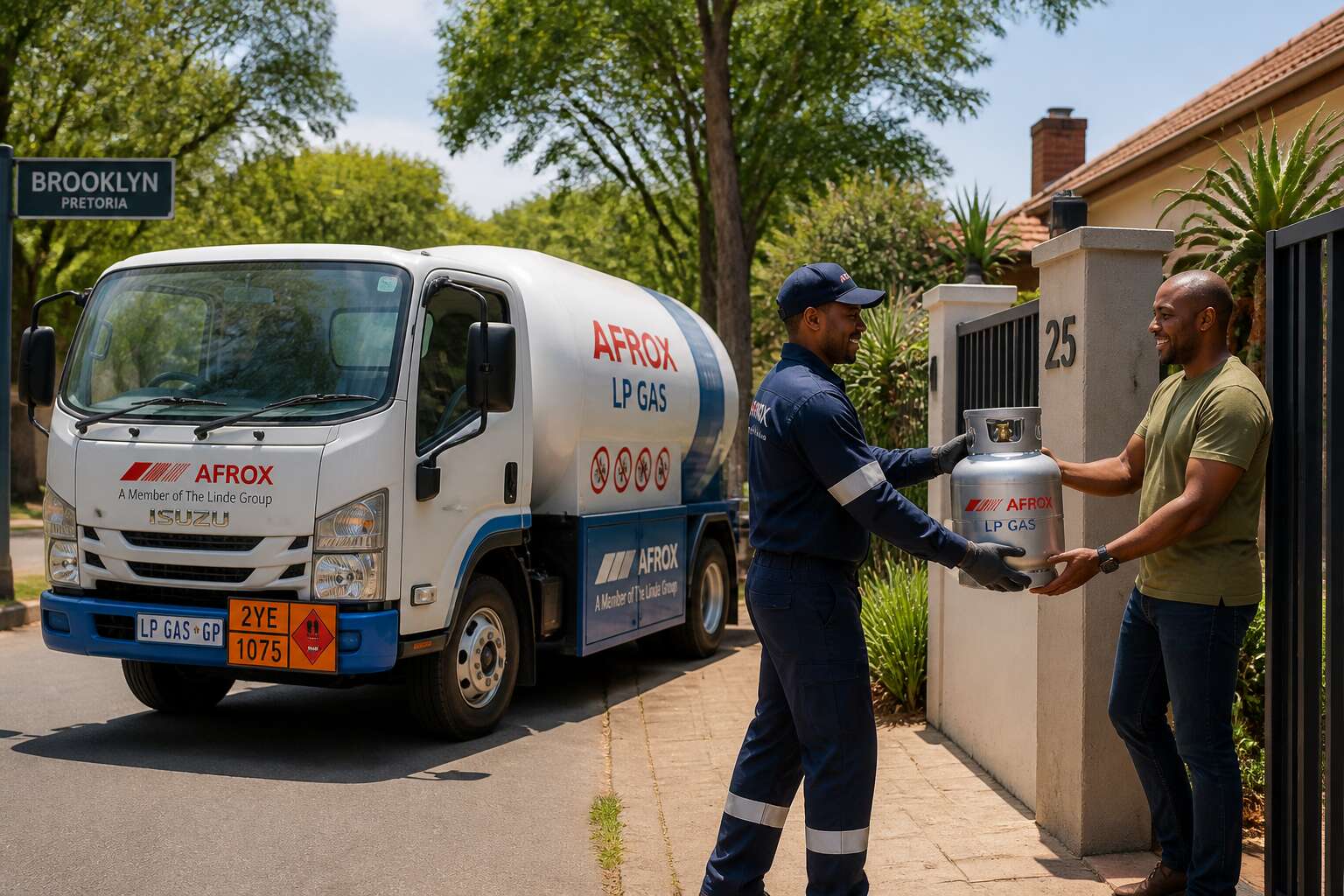
The Fundamentals of Liquefied Petroleum Gas in Brooklyn Pretoria
What Is LPG and How Is It Used in Brooklyn Homes
Most homes in Brooklyn Pretoria depend on a fuel most residents never see. Liquefied petroleum gas, or LPG, is a blend of propane and butane that shifts from liquid to vapour under pressure. That phase change releases energy efficiently, making it ideal for domestic use. For anyone weighing LP gas Brooklyn Pretoria as an option, the fundamentals matter.
Here is how LPG typically works in Brooklyn homes:
- It is delivered via a refillable cylinder or a fixed tank.
- Regulators and pipes carry the vapour to appliances.
- Burners or heating elements convert it into heat.
The real benefit is continuity. When municipal power fails, the gas cylinder keeps cooking and geysers running. A 19kg cylinder lasts a moderate household about three weeks. That reliability is why I see LP gas Brooklyn Pretoria as a fixture in the suburb’s kitchens and bathrooms. It simply does its job.
Advantages of Choosing Gas Over Electricity
The average Brooklyn household loses power several times a month. That fact alone pushes many homeowners toward a different fuel. Electricity is generated and delivered in real time, but LP gas Brooklyn Pretoria sits quietly in a cylinder until you open the valve. You hold the supply in your hands.
Gas also tends to win on price. Eskom tariffs climb each year, while gas often undercuts electricity for cooking and water heating. You avoid fixed connection fees entirely. The everyday benefits stack up quickly:
- Hot water on demand, even during load shedding.
- Instant heat that does not depend on the municipal grid.
- A refillable cylinder that gives you complete control over usage.
That independence is the real prize. With LP gas Brooklyn Pretoria, you bypass the grid’s unpredictability. No waiting for technicians, no scrambling when the lights go out. Just a flame whenever you need it.
Common Applications for LPG in Residential and Commercial Spaces
Understanding the fundamentals of LP gas Brooklyn Pretoria starts with its physical state. Liquefied petroleum gas is a mixture of propane and butane that turns to vapour when released from pressure. That vapour ignites cleanly and carries a high energy density, which is why hospitals, bakeries, and warehouses rely on it when the grid falters.
In residential settings, the gas feeds cooktops, geysers, and underfloor heating systems. Commercial users apply it differently:
- Industrial forklifts run on LPG because it burns cleaner than diesel indoors.
- Restaurants use it for grills, ovens, and dishwashers that need instant heat.
- Greenhouses and chicken broilers rely on it for temperature control.
For the homeowner, a standard 19 kg cylinder connects to a regulator and a copper line. The system is simple, and the LP gas Brooklyn Pretoria refill network is well established. The same fuel that powers a braai can also run a backup generator for an office park.
Selecting a Reliable Gas Supplier in Brooklyn Pretoria
Key Factors to Evaluate When Comparing Suppliers
The difference between a smooth gas setup and a recurring frustration sits squarely with your supplier’s operating habits! When comparing LP gas Brooklyn Pretoria providers, the price per kilogram matters, but so does the quality of their cylinders and the honesty of their delivery promises.
Evaluate a few practical criteria:
– delivery windows during winter peaks
– cylinder exchange and deposit policies
– after hours emergency response
– rental conditions for bulk storage tanks
Transparency separates the best suppliers from the rest. They publish their rates and safety certificates without being asked. Accountability also matters. They own defects in their own equipment instead of shifting blame to the installation crew.
Selecting LP gas Brooklyn Pretoria involves checking compliance with the South African National Standards for gas handling. Their certification documents should be available for review. The stronger suppliers in this area hand them over without delay.
Why Local Supplier Expertise Matters for Brooklyn Residents
A gas leak in the dark hours doesn’t care about your supplier’s marketing brochure. Local expertise means someone who knows Brooklyn’s street layout, its older homes with their peculiar plumbing quirks, and the seasonal demand spikes that hit Pretoria’s eastern suburbs every winter. The operator who services your neighbourhood understands these rhythms intimately. They know which installations were done hastily during the 1980s building boom. They know where delivery trucks can actually manoeuvre.
When you choose LP gas Brooklyn Pretoria, you’re choosing a relationship with someone who has a stake in your safety. Distant call centres cannot offer that. Local suppliers have reputations to protect within walking distance of their own homes. That accountability changes how they respond when something goes wrong. It transforms a transaction into a covenant. For residents who rely on LP gas Brooklyn Pretoria for cooking and heating, this presence is not a convenience. It is the foundation of trust. I have seen what happens when trust breaks, and the consequences echo.
Red Flags to Avoid When Choosing a Gas Provider
Your neighbour’s bargain gas cylinder once seemed like a smart move until it leaked. That is a common story in Brooklyn, where uneven maintenance and informal installer networks create hidden risks. When you search for LP gas Brooklyn Pretoria, you need a supplier who tests, certifies, and documents every connection. Red flags appear early. Gas is not a commodity you can haggle over.
- Quotes without a valid South African Gas Association certification
- Technicians who refuse to do a pressure drop test
- No written emergency contact for after-hours callouts
Also watch for vague pricing. A quote that changes after installation signals trouble. Reliable providers in Pretoria’s eastern suburbs publish fixed rates and explain all charges upfront. Avoid anyone who rushes you. Trust your instincts, they usually catch what the fine print hides.
Installation and Ongoing Maintenance Essentials
The Importance of Accredited Gas Installers
The biggest myth about gas installation is that any handyman with a spanner will do. In Brooklyn Pretoria, the difference between a certified installer and a lucky guesser shows up in your family’s safety and the lifespan of your appliances.
Accredited gas installers for LP gas Brooklyn Pretoria undergo rigorous training and understand the regulations governing these systems. They test for leaks, verify pressure levels, and ensure your setup complies with SABS standards.
Ongoing maintenance is where many homeowners fall short. Annual inspections and servicing of regulators, hoses, and burners prevent unexpected failures during a braai. A well maintained LP gas Brooklyn Pretoria system runs efficiently, and it spares you the 2am panic of a suspected gas leak.
Step-by-Step Installation Process for Household Systems
A loose connection gives no warning. It simply fails, often at the worst moment. We see it all the time in Brooklyn homes where installation shortcuts caught up with the owner.
Proper installation of household LP gas Brooklyn Pretoria systems follows a clear sequence. The installer assesses the site first, then maps pipe routes, checks ventilation, and secures the cylinder. Pressure testing comes before any appliance is connected.
The order of work matters:
- Isolate and purge the line
- Mount the regulator and hoses
- Connect appliances with approved fittings
- Test for leaks with an electronic detector
Ongoing maintenance is where systems wear down. Regulators drift, hoses perish, and burner ports clog. An annual service catches those problems early. For LP gas Brooklyn Pretoria users, a fixed maintenance schedule prevents the 2am panic of a suspected leak.
Routine Maintenance Checks That Extend Equipment Lifespan
Routine maintenance checks are the difference between a system that runs for years and one that fails without warning. A regulator that drifts by a few kilopascals changes flame behaviour. Carbon build-up appears. Burner ports clog. The equipment compensates until it cannot. That is the moment most homeowners notice.
– Inspect hoses for perishing and cracks
– Verify regulator output pressure
– Test for leaks at every connection point
– Clean burner ports and check ignition
These checks take less than an hour when performed properly. For LP gas Brooklyn Pretoria households, consistency matters more than complexity. A set seasonal inspection extends the lifespan of every component, from the cylinder valve to the appliance nozzle. It costs little. It saves the expense of premature replacement. That is a bargain you can feel!
Troubleshooting Common Gas Appliance Issues
An installation that runs quietly on day one can sputter by month three. Most gas appliance faults in Brooklyn homes are not mysteries, they are symptoms. A flame that lifts and burns yellow signals wasted fuel. An igniter that clicks without catching usually means a dirty electrode, or a regulator losing its hold on pressure.
For LP gas Brooklyn Pretoria households, troubleshooting begins with observation. The appliance tells a story. Weak heat output points to blocked jets. Soot near the burner suggests incomplete combustion. Delayed ignition often traces to a worn thermocouple.
Common faults worth knowing:
- Pilot light extinguishes repeatedly
- Weak flame despite a full cylinder
- Yellow flames instead of steady blue
- Gas odour with no visible leak
Each symptom leads to a specific component. Gas flow, combustion, or safety cut-offs. Correct the root cause and the appliance returns to its quiet rhythm.
Upgrading Old Gas Systems for Better Efficiency
Older gas systems in Brooklyn Pretoria often operate at a fraction of their intended efficiency. A stove from the 1990s can consume up to 30% more fuel than a modern equivalent. That statistic alone justifies a careful look at what sits behind your walls.
Upgrading starts with the regulator and pipework. Undersized copper lines from an earlier era restrict flow and cause pressure drops. For LP gas Brooklyn Pretoria properties, replacing dated components with current SABS-approved fittings ensures every appliance receives the exact pressure it was designed for. The difference in flame stability is immediate.
- Install a gas monitor to flag micro leaks before they become hazards.
- Upgrade to stainless steel flexible hoses where the layout permits.
- Replace aging valves with quarter-turn ball valves for easy shut-offs.
Ongoing maintenance then becomes a straightforward discipline. A modern system with isolated lines allows you to service each appliance without cutting the entire household supply. That preserves your daily rhythm and keeps your LP gas Brooklyn Pretoria installation dependable for the next decade.
Understanding Gas Pricing and Value
Factors That Influence Gas Prices in the Region
Pricing in Brooklyn Pretoria is shaped by more than market rates. Transport costs, storage capacity, and seasonal demand each play a role. I have seen suppliers adjust quotes based on tank sizes and refill frequency. A smaller cylinder might cost more per kilogram than a bulk installation.
Consider these value factors:
- Distance from main depots in Pretoria
- Delivery minimums and emergency callouts
- Payment terms for credit customers
The local supply chain for LP gas Brooklyn Pretoria also depends on exchange rates and global oil prices. Even so, transparent suppliers break down charges clearly. Understanding these variables helps you compare apples to apples. That is the real value.
Bulk Tanks Versus Refillable Cylinders: Cost Breakdown
LP gas Brooklyn Pretoria customers face a stark price difference between exchange cylinders and bulk tanks. A 9 kilogram cylinder costs roughly 35 percent more per kilogram than a bulk refill. The gap is not market whim. It is fixed costs spread across total volume.
A bulk installation means an upfront bill for the tank, foundation, pipework, and certified installer. Pay that once, and subsequent refills approach wholesale rates! Cylinders require no installation, but each exchange bundles in depot handling, transport, and a deposit on the steel vessel.
- Bulk tanks: one installation charge, then a lower per kilogram refill rate
- Cylinders: repeated handling fees, deposits, and retail markups on every swap
The markup on cylinders compounds quietly. LP gas Brooklyn Pretoria households that refill every few weeks absorb that premium all year. That makes the bulk versus cylinder choice an annual budgeting matter rather than a convenience preference.
Innovative Ways to Reduce Monthly Gas Expenses
Most Brooklyn households never see the 48 percent jump in their winter gas bill coming until it arrives. That figure, drawn from local supplier data, reflects the hidden costs baked into every unit of energy. LP gas Brooklyn Pretoria homes burn through fuel differently across seasons, yet most residents pay the same retail rate year round, ignoring the quiet inefficiencies that inflate their monthly totals.
Appliance efficiency is where the real savings hide. A stove burner with a yellow flame loses up to 15 percent of its heat to incomplete combustion, while a properly tuned burner converts nearly all its fuel into usable energy. That difference compounds on a R500 monthly refill, pushing the annual waste well into the hundreds of rand.
Shopping habits shift the ledger even further. Consider these patterns that Brooklyn families routinely overlook:
1. Comparing per kilogram prices across three local suppliers before each refill, not just the nearest depot, saves an average of R38 per cylinder.
2. Scheduling gas heavy cooking for weekdays, when demand drops and some suppliers offer quieter refill times, occasionally unlocks modest discounts.
3. Grouping purchases with neighbours to reach bulk order thresholds turns small individual orders into a single discounted transaction.
Monitoring indoor temperature patterns also reveals waste. Many homes heat empty rooms for hours because the thermostats sit in hallways or near drafty windows. A simple repositioning of cooking and heating schedules around actual occupancy can trim usage by a fifth without sacrificing comfort. Understanding where LP gas Brooklyn Pretoria resources actually go each month transforms guesswork into a manageable budget line.
Is There a Cheaper Alternative? Comparing Costs with Other Regions
Surprising as it sounds, the same kilogram of gas costs 14 percent more in Brooklyn than in Witbank, a difference that rarely reflects product quality. It reflects distance from refineries, tanker availability, and the number of intermediaries in the supply chain. When you compare LP gas Brooklyn Pretoria pricing against other regions, you see that proximity to the Sasol plant or the coast creates immediate advantages for some towns.
Is there a cheaper alternative? Sometimes yes. Moving to a bulk tank installation with two or three neighbours spreads the fixed delivery fee across many cubic metres, which lowers the cost per unit. Yet residents of smaller Mpumalanga towns often pay less per kilogram, but they wait longer for refill trucks. That is the value trade-off! Your true expense includes convenience, reliability, and safety, not the sticker price alone. A rand saved per kilogram loses meaning if your LP gas Brooklyn Pretoria supplier restocks your cylinder only twice a month.
Safety Protocols and Regulatory Compliance
Essential Gas Safety Tips Every Homeowner Should Follow
In South Africa, gas safety isn’t a personal preference; it’s enshrined in SANS 10087, the standard governing the installation and maintenance of LPG systems. For LP gas Brooklyn Pretoria households, the regulatory landscape demands rigorous attention to every connection, from the storage tank to the burner flame.
Mastering these protocols involves more than having a certified installer handle the job. Annual inspections, leak testswithsoapy water, and verifications of regulator performance are non-negotiable. However, homeowners bear equal responsibility. Regular visual checks for hose embrittlement, ensuring cylinders stand upright, and confirming adequate ventilation around storage areas form the basis of domestic safety.
- Check for gas odour around connections regularly
- Keep cylinders at least one metre from ignition sources
- Replace flexible hoses every five years without exception
Remaining compliant with local by-laws for LP gas Brooklyn Pretoria residents protects your family, your property, and your future liability. Treat each month’s cylinder exchange as an opportunity to reassess these small, yet consequential, habits.
Recognising Potential Gas Leaks and How to Act Fast
A single whiff of rotten eggs inside your Brooklyn scullery could signal more than a spoiled fridge. That unmistakable sulphurous tang is ethanethiol, the warning agent infused into otherwise odourless LPG. For LP gas Brooklyn Pretoria users, this scent provides the earliest warning.
Recognise the signs quickly:
- Hissing valves
- Frost forming on cylinder bases
- A faint petroleum smell near regulators
Each indicates escaping vapour. Regulatory protocols under SANS 10087 require homes to maintain leak-free systems, verified through annual pressure tests. A detected leak means no switches, no flames, no appliances. Open windows, evacuate the structure, and call your supplier from outside the premises.
Compliance documentation, including certificates of conformity, should accompany every LP gas Brooklyn Pretoria installation. These records substantiate your safety posture should municipal inspectors call.
Ventilation Standards for Indoor Gas Appliances
A closed room with a running gas stove can reach dangerous carbon monoxide levels in under 40 minutes. That is why SANS 10087 ventilation standards exist. Indoor LP gas Brooklyn Pretoria installations demand permanent airflow paths. A 10 000 kJ/h appliance requires at least 100 cm² of free ventilation area, and that figure doubles when the appliance lacks a flue. These thresholds ensure combustion by-products are carried away before they accumulate.
The regulations separate rooms by volume and appliance type. Bedrooms and bathrooms face stricter limits than open-plan kitchens. Installers must calculate the room’s cubic capacity and match it against the appliance’s input rating. Compliance documentation should record these calculations, because municipal inspectors will verify them.
Officers look for blocked vents, painted-over grilles, and modified ducting. Crimped aluminium flex pipe, common in older Brooklyn homes, fails current standards. Replace it with rigid or semi-rigid pipework. Every LP gas Brooklyn Pretoria system must show unobstructed airflow at both high and low levels, allowing any leaked gas to disperse before it can ignite.
Understanding SABS Regulations and Local By-Laws
Safety protocols for LP gas Brooklyn Pretoria extend beyond common sense. They are codified in SABS regulations and municipal by-laws that carry legal weight. Ignoring these rules turns a convenience into a liability.
SABS standards cover the technical performance of regulators, hoses, and appliances. Local by-laws, however, address the human context: distance from boundaries, ventilation paths, and installation permits. Together, they form a safety net.
Homeowners should demand written proof of compliance. A valid SABS mark on equipment and an approved installer’s certification are non-negotiable. Local authorities retain the right to inspect, and their approval is the final word.
Emergency Preparedness: Evacuation and First-Aid Response
Emergency preparedness turns compliance into action. Every household using LP gas Brooklyn Pretoria should have a clear evacuation route mapped out. Everyone in the home needs to know the sound of a leak, the smell of the odorant, and the path to fresh air.
First-aid response begins with simple actions. Move the person to open space, keep them warm, and call emergency services immediately. Burns require cool running water for twenty minutes. Do not apply creams or ointments. I have seen too many people reach for butter.
A practical checklist helps:
- The emergency numbers for LP gas Brooklyn Pretoria suppliers and local fire services are stored near the phone.
- A torch, not a candle, sits near the gas meter.
- A fire extinguisher rated for gas fires hangs within reach of the kitchen.
Regular drills turn these steps into reflexes. Preparedness is not paranoia. It is the quiet confidence that comes from knowing you can respond.
When to Schedule Professional Safety Inspections
Most homeowners only think about gas compliance when something goes wrong. That is reactive thinking. In Brooklyn Pretoria, the regulations governing LP gas Brooklyn Pretoria are precise, yet few residents know exactly when their installations become non-compliant. Seals degrade. Hose connections loosen. Ventilation paths shift. These are silent processes.
According to SABS standards, a professional safety inspection for LP gas Brooklyn Pretoria should occur after any structural renovation, before selling a property, and at least every two years for residential systems. Commercial premises demand annual checks. An inspector will test regulator pressure, inspect hose integrity, and verify appliance connections. They will confirm ventilation paths and detect micro leaks that human senses cannot register.
Treating these inspections as administrative chores misses the point entirely. Compliance is measurable evidence that your system still performs as designed.
Environmental Impact and Future Trends
LPG’s Role in Reducing Carbon Emissions
South Africa’s electricity grid remains heavily dependent on coal, placing a heavy carbon burden on every kilowatt used. LPG provides an alternative with a cleaner combustion profile. Compared with wood or paraffin, it produces fewer combustion byproducts.
For those using LP gas Brooklyn Pretoria, the environmental story continues to improve. Future production routes signal meaningful change:
– bioLPG derived from organic waste will lower lifecycle emissions
– hybrid systems pairing gas with rooftop solar offer reliable low carbon performance
– smart metering helps households track and reduce consumption precisely
The measure of LP gas Brooklyn Pretoria households today is their contribution to a lower emission domestic energy mix. Demand for cleaner backup energy will only grow as the national grid comes under further strain.
Innovations in Gas Storage and Delivery Systems
The environmental story of LP gas Brooklyn Pretoria extends beyond combustion alone. The way gas reaches your home matters just as much as how it burns. Traditional steel cylinders are giving way to lightweight composite vessels that require less energy to transport. That reduction in vehicle weight translates into lower delivery emissions across the Pretoria suburbs.
Delivery logistics are becoming smarter too. Route optimisation software now allows suppliers to cluster stops efficiently, cutting fuel consumption per drop. Some operators are even trialling electric delivery vehicles for short runs. The effect on emissions is tangible!
Future storage innovations worth watching:
- Advanced telemetry in bulk tanks that monitors levels remotely, reducing unnecessary delivery trips.
- Composite cylinders with embedded sensors that flag pressure changes before leaks occur.
These developments mean LP gas Brooklyn Pretoria households can expect fewer delivery vehicles on the road and a more efficient supply chain overall.
The Growing Popularity of Gas as a Primary Energy Source
Households across Pretoria are reconsidering their energy mix. The environmental math has shifted. LP gas Brooklyn Pretoria offers a lower carbon footprint than coal-derived electricity, and the grid’s unreliability makes gas an attractive primary source. Solar installations often pair with gas for backup, but more families are choosing gas as the baseline. I have watched this shift accelerate over the last two years! Public sentiment is moving toward fuels that burn cleanly and respond instantly. The convenience of a permanent gas connection outweighs the old habit of keeping electric geysers. Expect demand to rise sharply as municipal power struggles continue.
Future trends point to hybrid systems where gas complements renewable generation.
- Seasonal tariffs might encourage gas use during evening peaks.
- Smart meters will track consumption in real time.
- Biogas blending could reduce the carbon intensity of LP gas Brooklyn Pretoria further.
These shifts are not distant. They are arriving within the next few years.
0 Comments