
Understanding Propane Supply for High-Consumption Needs
How Bulk Fuel Storage Differs from Standard Tank Exchange Programs
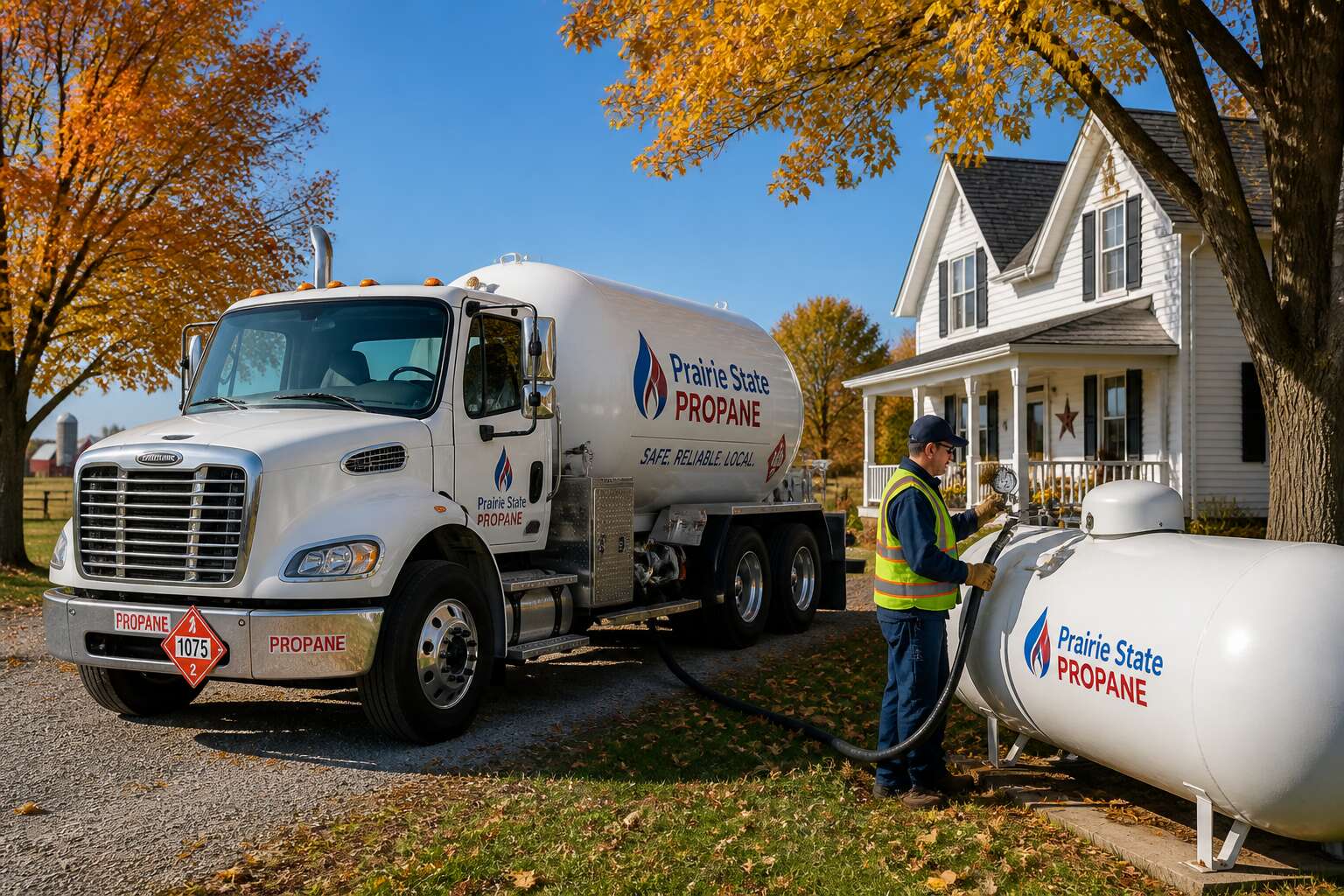
Your standard 9kg gas bottle works for a home braai, but it fails when faced with a commercial kitchen or a factory floor. Bulk LP gas delivery changes the approach. Instead of swapping cylinders, you install a fixed tank and refill it on site.
Understanding propane supply for high-consumption needs means focusing on volume and continuous availability. Standard tank exchange programs require frequent trips to swap empty cylinders. Bulk storage eliminates that hassle. A refill truck comes to you.
- Payment is based on measured litres, not per exchange.
- Delivery schedules align with your consumption rate.
- You avoid the risk of running out during peak hours.
Bulk LP gas delivery reduces manual handling and safety hazards. For South African businesses, this means fewer interruptions and more predictable fuel costs.
Evaluating On-Site Tank Capacity for Residential and Agricultural Use
The economics of propane supply for high-consumption needs shift dramatically when you stop thinking in cylinders. A 48kg bottle simply cannot sustain an irrigation pump running through a cold Highveld winter night. Your farm’s thermal blanket for a packhouse, or the hot water system servicing a 40-room lodge, demands a different calculus entirely.
Evaluating on-site tank capacity for residential and agricultural use means calculating peak draw, not average usage. A tank that lasts two months in summer might be drained in nine days by a drying operation. The South African landscape offers two primary bulk LP gas delivery solutions: the above-ground tank, typically ranging from 500kg to 5000kg, and the underground option, which preserves your view and protects the vessel from veld fires.
Key factors to consider before installation:
– The distance from the proposed tank site to the point of consumption, since pressure drop increases with pipe length.
– The specific gravity of the gas blend you will receive, which varies slightly by season and affects combustion efficiency.
– The frequency of refilling required versus the capability of your access road for a 20-ton truck.
The residential implication is more subtle. A home that uses 9kg per month on a basic geyser will find a 500kg tank an absurd expense. However, a household running underfloor heating and a gas pool pump will deplete a standard tank swiftly. You must match the vessel’s capacity to your actual hourly consumption rate, not your monthly bill. Oversizing introduces fuel ageing and vaporisation issues; undersizing defeats the purpose of bulk LP gas delivery entirely. The supplier’s pressure readings guide the decision, but your willingness to audit your own usage patterns matters more.
The Logistics of Coordinating Refills with Daily Consumption Patterns
The 20-ton tanker is a scheduled event, not an emergency service. Bulk LP gas delivery follows a transport plan. A refill must slot into the route or risk a long wait. A packhouse drawing steady volume from dawn to dusk depletes a tank at a predictable hour. That hourly figure drives the ordering decision.
Coordinating refills with daily consumption patterns requires honest tracking. The conveyor runs during the week, but the dryer operates overnight. Winter on the Highveld pushes the delivery window out, so the order must go in while the tank still holds enough buffer.
The variables shift each season:
- The pumping rate of the tanker, which may exceed burner demand during mild-weather operation.
- The scheduling window, which narrows during peak agricultural months.
- The depth of the gauge reading, which determines whether you order now or after the weekend.
Bulk LP gas delivery works when the supplier and the end user share the same calendar!
Financial Considerations When Signing an LP Contract
Fixed-Rate vs. Market-Variable Pricing: Which Safely Preserves Your Budget
When signing for bulk LP gas delivery, the price mechanism is your primary arbiter. Fixed-rate contracts fix each litre’s cost, immune to supplier increases. Market-variable contracts track wholesale fluctuations, offering savings or losses depending on the season. The difference matters most in winter, when usage climbs.
Consider these points:
– How many months you commit to.
– Whether your usage stays constant.
– What fees apply if you cancel.
Fixed pricing gives predictable budgeting. Variable pricing requires monitoring and a tolerance for suspense. South African LP gas prices move with global oil, and your choice reflects your financial resilience.
Seasonal Demand Shifts and the Benefits of Locking a Summer Rate
The summer months offer a quieter negotiation table. When demand for bulk LP gas delivery cools, suppliers are more willing to lock rates that would seem reckless by July. Signing during this lull is not charity; it is arithmetic.
Consider the terms before the ink dries:
- The length of the commitment and whether usage patterns remain constant.
- The penalties for early cancellation, which can erode savings.
- Whether the supplier can adjust fees outside the agreed rate.
A summer rate freezes the litre price before winter’s spike, when usage climbs and the market grows restless. In South Africa, the gap between seasonal pricing can be stark. For those who depend on bulk LP gas delivery, locking early protects the budget and removes the suspense of winter billing.
Payment Plans, Leasing Options, and Volume Discount Tiers
Up Front, the true cost of bulk LP gas delivery is never written on the price board. In South Africa, suppliers conceal their margins in payment structures, tank leases, and volume tiers. Payment plans vary: a lump sum, a monthly instalment, or a pre-paid account. Leasing options for the tank may appear as a separate fee, one that quietly compounds each season. Volume discount tiers reward steady usage, but only when you cross a specific threshold.
- The payment schedule and any interest applied.
- The lease fee versus outright tank purchase.
- The threshold for each volume discount tier.
I have seen contracts where the discount vanished under administrative charges. Read the ledger first, then sign!
Safety Requirements and Equipment Maintenance for Above-Ground Tanks
Understanding Local Codes for Tank Setbacks and Storage Clearances
In the Lowveld heat, a tank’s paint can crack, exposing bare metal to corrosive moisture. The South African standard, SANS 10087-1, sets the baseline, but your responsibility starts with a monthly visual check. Inspect the regulator, the piping, and the dome cap for debris.
Setback rules are not arbitrary. Your municipal zoning bylaws may require a four-metre clearance from a boundary wall, while the national code permits less. Both apply, and the stricter one wins.
- Test pressure relief valves for free movement annually.
- Check the tank’s liquid level gauge for accuracy.
- Clear the area around the tank after each season.
When you schedule bulk LP gas delivery, the driver performs a cursory inspection, but they are not your maintenance team. A corroded fitting can halt a scheduled fill.
Signs That Regulator Valves or Piping Need Professional Attention
An above-ground tank quietly holds the pressure that cooks your meals or heats your water. Most failures do not announce themselves with drama; they whisper through a hissing connection or a faint odour that you convince yourself you imagined. By the time you notice the problem, the damage has often been working on the system for months. This is why a cursory glance while the bulk LP gas delivery truck pulls away is not enough.
Professional attention becomes necessary when you notice the regulator hissing continuously to release pressure. That is not a relief valve doing its job; it is a system struggling to cope. Check for a white frosting building on the regulator body, which signals a freezing valve that will soon seize completely. Rust that flakes off the piping when you touch it is another warning sign. If you have to strain to read the gauge through a fogged lens, the seal has failed and moisture is already inside.
Look for these specific indicators during your walk-around:
1. The smell of gas lingers near the tank after the valve is fully closed.
2. A flame burns a lazy yellow instead of a sharp blue at your appliance.
3. Piping shows a slight bow or sag, meaning the supports have corroded away.
4. The lid on the dome cap will not seat flush, exposing fittings to rain and termites.
Each of these symptoms bypasses your own skill set. They require a qualified technician who can test the system under load. Schedule that visit before the next bulk LP gas delivery, because a supplier will not fill a tank they suspect is leaking. They will refuse, call you, and leave. Your choice then is to wait for a repair slot while your gas runs empty. The routine of inspection, the respect for what a tank holds under pressure, that is what keeps the supply chain honest.
Snow, Ice, and Debris Management Around the Ladder and Fill Valve
Snow and ice change how an above-ground tank behaves. The ladder grows slick, and the fill valve can freeze shut on the morning your gauge reads empty. In the highveld, frost forms overnight, and debris gathers around the base, hiding small cracks in the piping.
Your walk-around should cover the following:
- The ladder rungs must be clear of ice and firmly attached to the tank wall.
- The fill valve area must be free of leaves, grass clippings, or animal nests.
- The ground beneath the tank must drain properly so meltwater does not pool around the supports.
Each detail matters, because a blocked valve or a slippery ascent delays your bulk LP gas delivery and forces a technician to clear the area before any refill can happen.
Emergency Shutoffs: Location, Operation, and Employee Training
Emergency shutoffs are simple mechanical failsafes, yet they only work when someone finds them without hesitation. During bulk LP gas delivery, a faulty hose or loose connection can release gas in seconds, so the shutoff valve must be positioned where a driver or technician can reach it without climbing over obstacles. Locate one valve at the fill point and another near the regulator.
Then test both monthly, because a seized valve is worse than no valve at all. Employee training goes beyond pointing at a red handle. Run timed drills in daylight and at night, with gloves on, and ask each worker to locate the shutoff by feel. If a person cannot find it within five seconds, mark that as a failure and retrain. These drills build the kind of automatic response that makes an emergency boring, and that is exactly what you want.
The Importance of Annual Leak Checks and Leak-Down Tests
Above-ground tanks live in the open. Sun bakes the fittings, wind rattles the piping, and thermal cycling loosens connections over time. That is why annual leak checks matter. A leak-down test isolates the tank, pressurises the system, and waits. Any drop on the gauge means gas is leaving somewhere it should not.
For bulk LP gas delivery, a silent leak turns every refill into a hazard. The driver’s gauge reading might mask the loss. Regular testing exposes the problem while it is still small.
- Inspect valve packing nuts
- Check dip tube connections
- Examine weld seams for stress cracks
- Test pressure relief valve operation
Do not wait for odour to announce the issue. The smell is added only to the vapour, and a slow liquid leak may never reach your nose. Time the leak-down test to coincide with bulk LP gas delivery, when the tank is full and the vapour space sits at operating pressure.
Preventing Corrosion with Proper Coating and Tank Lifts
Salt air is merciless on carbon steel. A chip in the tank’s coating can widen into corrosion within months, and once rust takes hold, the metal loses thickness quietly. For bulk LP gas delivery, that hidden weakening is a serious concern when the vessel sits full at operating pressure.
Coating integrity is the first line of defence. The finish must be checked for pitting, blistering, and scratches, especially around edges and fittings where moisture collects. Tank lifts add another layer of protection by raising the vessel off the ground. This allows a constant flow of air beneath the base, preventing the damp, stagnant conditions that breed rust.
Common trouble points:
- Coating cracks where the legs meet the tank shell
- Water pooling around the concrete pad
- Loose or corroded lifting lugs
These findings matter long before the next delivery.
Environmental Impact and Clean-Burning Efficiency of Propane
How Propane Compares with Heating Oil on Particulate Emissions
In South Africa, heating oil still powers many rural households and agricultural operations, but the airborne cost is steep. Fine particulate matter from heating oil combustion has been linked to asthma and cardiovascular strain. Propane, however, burns with a cleaner flame, releasing substantially less particulate emissions and virtually no sulphur dioxide.
For customers using bulk LP gas delivery, the environmental benefit compounds with every refill. A single switch from heating oil to propane can cut fine particle output by more than 90 percent, a figure verified by combustion studies. The efficiency is equally telling: propane delivers roughly 91,500 BTUs per gallon, while heating oil offers about 138,000 BTUs per gallon, yet propane’s combustion completeness ensures far less fuel is wasted as smoke.
Cleaner air and better heat utilisation arrive through the same supply line, and bulk LP gas delivery makes that shift practical across the country.
Why Low Carbon Intensity Matters for Homes and Fleet Vehicles
Propane’s carbon intensity is measured in grams of CO2 per megajoule, and it stacks up well against diesel and heating oil. A typical home heating system running on propane releases far less greenhouse gas per useful unit of heat. That matters when you are burning fuel every winter evening!
For fleet vehicles, the same efficiency reduces the carbon footprint of every delivery route. Cleaner fuel also means fewer particulates entering the engine oil. I have seen bulk LP gas delivery transform a single farm’s energy use, and the low carbon advantage shows up in both the air and the maintenance ledger.
Renewable Propane Options for Environmentally Conscious Buyers
Renewable propane blends can halve lifecycle emissions while retaining the clean burn that propane is known for. This appeals to environmentally conscious buyers across South Africa, especially those who rely on bulk LP gas delivery for daily energy needs. The fuel produces fewer particulates and less residue than diesel or heating oil, so tanks and engines stay cleaner for longer. I have seen rural households reduce both their carbon footprint and their maintenance frequency with a simple switch.
- renewable propane from cooking oil or animal fats
- bio-propane from agricultural residues
- blends compatible with existing storage tanks
For anyone weighing environmental impact, bulk LP gas delivery now offers a practical path without new equipment. That is progress you can measure in the air and in the ledger!
Selecting a Delivery Partner for Consistent Fuel Availability
Assessing Delivery Response Times and After-Hours Emergency Support
A supplier who vanishes midwinter has a peculiar talent for ruining one’s composure. Reliability is the quiet currency of bulk LP gas delivery, and it surfaces only during crises. Ask how quickly a partner responds to a low-tank alarm, not just how cheaply they quote the top-up.
Response times matter, but so does the temperament of the after-hours line. Some teams answer with sleepy competence; others offer voicemail theatre.
When vetting partners, I weigh three markers:
1. Average turnaround from call to delivery, verified by existing customers.
2. Availability of a human dispatcher outside business hours.
3. Clear protocols for tank-empty emergencies, including penalties for missed slots.
Nothing replaces a frank conversation about their backup fleet. The polite ones admit their constraints; the brash ones overpromise. Choose the former, because a consistent bulk LP gas delivery schedule is a relationship, not a transaction.
Monitoring Services That Automatically Trigger Refill Coordination
Fuel availability monitoring has transformed how South African properties manage their reserves. A supplier who installs remote tank gauges can track your levels continuously, then schedule bulk LP gas delivery before the needle drops below a safe threshold. This removes guesswork from the equation entirely.
In my experience, the best systems send alerts to both you and the dispatcher. Some platforms even generate consumption reports, which help you predict winter usage with surprising accuracy. When evaluating partners for bulk LP gas delivery, ask whether their monitoring service includes:
- Remote level sensors with cellular connectivity
- Automatic order generation when stock hits a preset percentage
- Real-time delivery confirmation and digital invoices
A partner who offers these features effectively becomes your fuel manager. You simply receive the gas, pay the account, and carry on with your day. That consistency matters more than a marginal price difference, because an empty tank costs far more than any discount saves.
Understanding Contract Terms, Renewal Windows, and Exit Fees
A handshake once sealed fuel agreements. Now a 14 page contract dictates whether your bulk LP gas delivery continues or stalls. South African buyers focus on the rand per litre rate, yet the exposure sits in clauses around renewal and termination.
Renewal windows deserve scrutiny. I have seen suppliers auto renew for 12 months unless you give notice 60 days before expiry. Miss that window, and you are locked in regardless of service failures! Exit fees vary. Some contracts charge a cancellation penalty equal to the delivery margin for the remaining term. Others require a minimum annual volume, leaving you to pay for gas you never used. Your bulk LP gas delivery should remain your choice, not a legal obligation.
Before signing, verify the following:
- The exact notice period required to avoid auto renewal
- Whether exit fees scale down over time
- Who owns the tank and what removal costs apply
Conversation Points to Gauge Trustworthiness During a Site Visit
A supplier’s depot often reveals more than their sales pitch ever will. During a site visit, ask about their maintenance schedule for storage tanks and delivery vehicles. Reliable bulk LP gas delivery depends on equipment that actually works under pressure.
- How many delivery trucks are currently in service?
- What is their average turnaround time for emergency callouts?
- Do they stock spare valves and regulators on site?
Watch how staff handle daily operations. A clean yard and organised dispensing area suggest discipline. I once visited a partner who could not show records of their last hydrostatic test. That silence told me everything. Your fuel availability hinges on these small details.
Matching Tank Size and Fill Frequency to Your Peak Usage Month
In South Africa, a cold winter snap can push a household’s gas usage to double its summer drawdown. This makes selecting your bulk LP gas delivery partner a matter of precise arithmetic, not guesswork. A partner who cannot project your peak demand will fail you at the worst moment.
The most reliable suppliers treat your tank size and fill frequency as a single calculation. I always ask how they project a client’s peak usage month. They must account for the tank’s vapourisation ceiling and schedule refills weeks ahead. They do not react to a low gauge; they anticipate it!
- How do they forecast consumption spikes?
- What is their minimum tank volume threshold for a guaranteed delivery window?
- Do they offer a summer fill contract to preload storage?
A mismatched schedule creates a real hazard. If your tank is undersized for the peak, or the partner sticks to a rigid route, you face downtime. The right bulk LP gas delivery service aligns its logistics with your calendar, giving you a buffer when the demand arrives.

0 Comments