
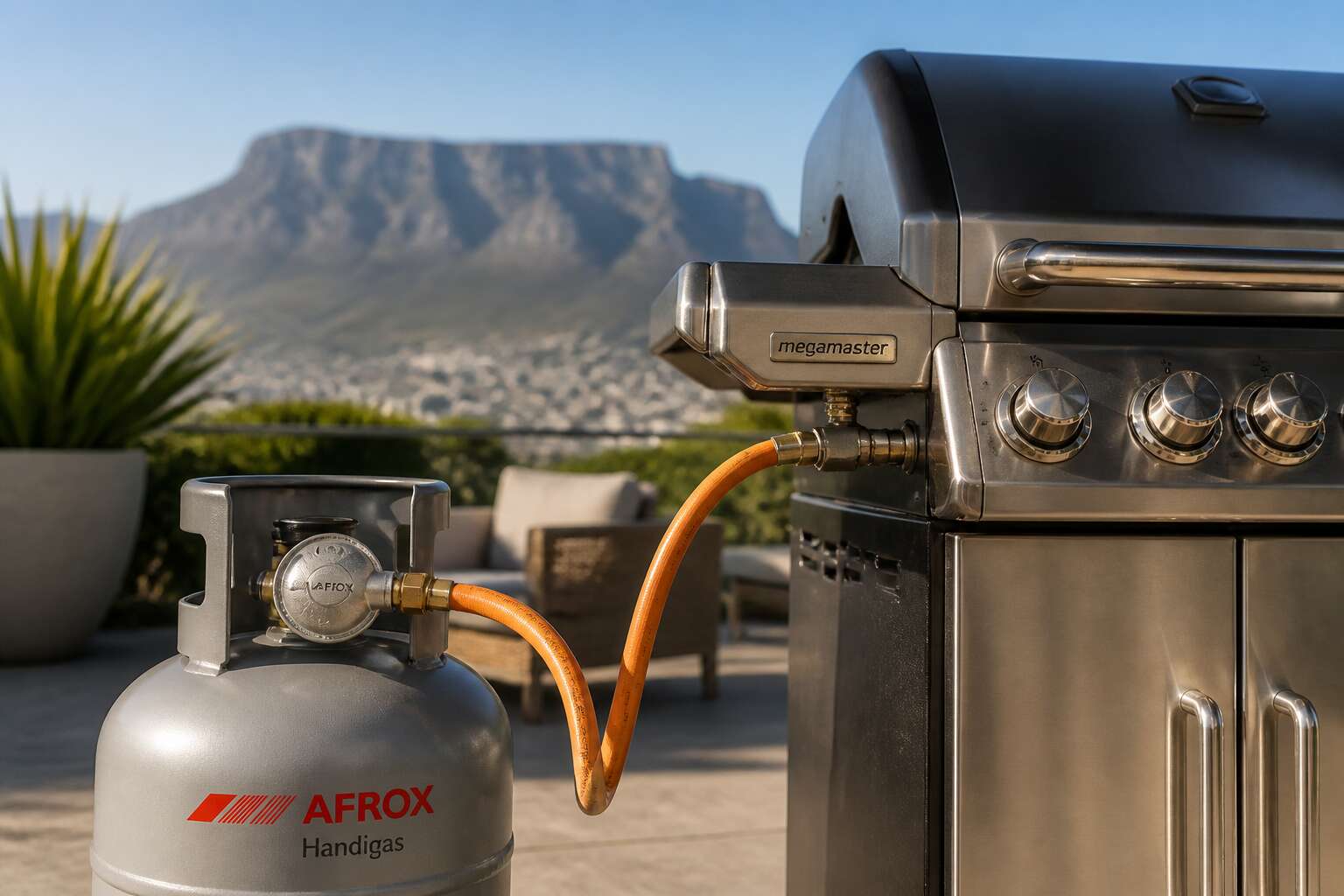
Understanding Gas Refill Options in the Mother City
Types of Gas Cylinders Used in Households and Businesses
The quiet clank of an empty cylinder is a familiar sound in Cape Town! For residential kitchens, the 9kg and 19kg bottles dominate, while commercial spaces like restaurants often switch to 48kg units. Recognising these differences helps you plan your gas refill Cape Town trips with ease.
- 5kg canisters for portable stoves and outdoor adventures
- 9kg and 19kg for everyday household cooking
- 48kg skid tanks for bakeries and catering businesses
Valve types vary too. A Campingaz cylinder uses a clip-on regulator, whereas a standard LP gas bottle needs a screw thread. Knowing your cylinder type ensures the right exchange and avoids mishaps at the depot.
Refill Versus Cylinder Exchange Programs
Beneath Table Mountain’s shadow, each empty cylinder poses a question. Do you seek a refill at a trusted depot, where your own bottle is measured and filled, or do you surrender it for a pre-filled exchange unit?
The choice shapes your gas refill Cape Town routine. Refilling suits those who know their cylinder’s provenance. Exchange offers speed, but the swapped unit may carry another household’s wear. Consider these differences:
- Refill preserves your valve and regulator fit.
- Exchange reduces waiting time at crowded depots.
For many, the decision comes down to trust in unseen hands versus familiar steel.
Regulatory Requirements for Gas Refilling Providers
Each year, Cape Town households cycle through thousands of gas cylinders. The choice between refill and exchange shapes both cost and safety. To understand gas refill Cape Town options, consider the depot network. Licensed providers operate under strict municipal bylaws. These rules govern cylinder inspection, valve testing, and fill weights. The Pressure Equipment Regulations of 2009 set the baseline. Compliance is not optional. Depots must:
- Display a valid operating permit
- Record every cylinder’s test history
- Use calibrated filling equipment
A quick check of the provider’s registration saves trouble later. For businesses, bulk refill arrangements offer predictability. For homeowners, a single cylinder refill remains straightforward. The Mother City’s regulatory framework exists to protect consumers. The fine print on your cylinder’s test date tells its own story.
Environmental Considerations of Refillable Gas
There is a quiet persistence in returning a cylinder for refill. The same vessel travels again and again, each gas refill Cape Town residents arrange meaning fewer raw materials consumed. Steel does not vanish after one use. It persists, holding propane or butane through decades of service. Refillable gas changes the environmental impact in measurable ways. I find that reassuring.
Consider the lifecycle. A single cylinder reused hundreds of times requires less energy than manufacturing replacements. Transport emissions also shrink, as depots remain local.
- Reduced landfill waste from discarded cylinders
- Lower manufacturing demand for new steel
- Smaller carbon footprint per unit of gas
Each exchange supports circular use. The Mother City’s refill network sustains this loop.
Where to Refill Gas in the City Centre and Suburbs
Major Gas Distributors and Authorized Depots
Finding a gas refill Cape Town service in the city centre can be a challenge, but the suburbs hold a network of authorised depots that make the task simple. Major distributors such as Afrox, Easigas, and TotalEnergies operate through certified agents across the peninsula. These depots are not always obvious from the street, yet their presence is steady and reliable.
For those navigating the CBD, consider these options:
- The Foreshore depot near the harbour
- The Woodstock outlet on Albert Road
- The Salt River branch beside the old railway line
Further afield, Claremont, Rondebosch, and Plumstead each host depots that serve households and small businesses alike. The suburbs offer a quieter, often faster route to a gas refill Cape Town, especially when the city centre traffic grows thick. Some depots in the southern suburbs stay open until early evening, which suits commuters returning from work. Knowing which depot handles your specific cylinder size saves time, and most authorised agents display their stock levels clearly.
Local Hardware Stores and Fuel Stations
Every weekday morning, a quiet exodus happens across Cape Town. Motorists and homeowners load empty cylinders into their boots, seeking a gas refill Cape Town before the evening braai.
The city centre hides a few practical options. Fuel stations along Strand Street and the Foreshore carry exchange cylinders, though stock varies by day. The dedicated depots in Woodstock and Salt River remain the most consistent.
Suburban hardware stores act as a second network. Family-run shops in Claremont, Rondebosch, and Plumstead keep a refill station behind the paint aisle. Some fill cylinders while you gather supplies. That arrangement shortens the entire errand. A short list helps when time is tight:
- Fuel station forecourts with visible gas cabinets
- Hardware stores with a dedicated refill counter
- Neighbourhood depots that fill while you shop
Check opening hours before you travel. Suburban locations often close by five, yet the petrol stations extend the gas refill Cape Town service into the night. That gap matters when a cylinder runs dry late.
Specialized Gas Delivery and Refill Services
In the city centre, the gas refill Cape Town network runs through a few dependable nodes. A depot in Epping fills cylinders while you wait, and another in Retreat runs a drop-and-collect service for office park managers. In the suburbs, stand-alone gas shops in Parow and Fish Hoek offer a stripped-back counter with no hardware aisles to wander through.
Specialised delivery services have grown a different lane. You call, book a slot, and a driver brings a filled cylinder to your gate. I have watched neighbours in the older suburbs switch to this route completely, trading a 40-minute round trip for a doorstop exchange.
- Most services cover a defined route per day, so bookings align to a district schedule
- The empty cylinder gets collected on the next delivery, not immediately
- Drivers carry the same certification that depot staff hold
For anyone without a car, this delivery layer turns the standard gas refill Cape Town errand into a simple appointment.
Mobile Refill Units and Event-Based Services
In the city centre, refill points sit inside industrial yards and combined hardware aisles. Suburban shops in Claremont and Sea Point offer a walk-in counter with fewer queues, and some double as appliance repair centres. Mobile refill units have grown into a separate option, appearing at farmers markets and festival grounds. They run on a published weekly circuit, so the gas refill Cape Town errand can happen while you shop.
- Verification of valve integrity
- Refill for 9kg and 19kg cylinders
- Immediate card or mobile payment
Event organisers use these units to top up multiple cylinders in one visit, skipping the depot run entirely.
Factors Affecting Refill Pricing and How to Budget
Average Price Ranges for Common Cylinder Sizes
Cape Town’s gas price is a moving target, and local demand, exchange rates, and transport logistics all push it around. One week your refill is a steal, the next it feels like you’re paying for the cylinder’s private jet. This variability is exactly why savvy consumers track the cost trends before committing to a single provider. Your budget, however, can be anchored if you understand the fundamental price drivers, namely the wholesale LPG market and the distance your chosen depot sits from the main storage facilities.
To plan your household expenses, a little foresight goes a long way. You shouldn’t be blindsided when the bill arrives, so knowing the benchmark figures for a standard gas refill Cape Town home or business relies on is essential. While prices fluctuate, you can generally expect to pay within these ranges for a standard refill:
– 9kg cylinder: R280 to R350
– 14kg cylinder: R420 to R520
– 19kg cylinder: R560 to R680
– 48kg cylinder: R1,400 to R1,650
The exact figure depends on who you call and how far they have to travel to get the gas. Door-to-door delivery services often add a surcharge to these baseline prices, so doing a quick price check online or asking for a quote over the phone is often worth the effort.
Delivery Fees and Minimum Order Requirements
Distance from the depot explains much of the price variation. A gas refill Cape Town provider in Milnerton pays different transport costs than one in Khayelitsha, and those costs appear on your invoice. Delivery fees typically range from R50 to R150, depending on the suburb and cylinder weight. These fees can exceed the price difference between two suppliers, so the cheapest quote is not always the cheapest outcome.
Minimum order requirements also shape your budget. Some suppliers will not dispatch a vehicle for a single 9kg cylinder.
- A 9kg cylinder often requires a minimum spend of R300.
- Two 14kg cylinders usually satisfy most minimums.
- 48kg refills rarely trigger the threshold.
In my experience, knowing these thresholds before you call prevents an awkward silence when the quote arrives with a surcharge. A gas refill Cape Town household that asks about delivery fees upfront avoids the gap between advertised and final price.
Seasonal Demand and Price Fluctuations
By mid-May, the queue at a gas refill Cape Town depot can stretch around the block. That line is a warning signal for anyone who waits until winter to order. Seasonal demand is the largest factor in pricing. In June and July, suppliers often raise their per-kilogram rate by 5% to 10% because residential consumption spikes. Logistics capacity and the rand exchange rate add further pressure, as most LPG is imported and quoted in dollars.
To budget for these swings, you need to watch the timing. Consider these points:
- Refill before the first cold front, not after it hits.
- Choose a 48kg cylinder to secure a lower per-kilogram price.
- Split a bulk order with neighbours to spread the cost.
Cape Town households that plan around seasonal peaks tend to avoid the worst of the price jump. They treat refilling as a yearly expense, not an emergency purchase.
Bulk Refill Discounts and Loyalty Programs
The price printed on a gas refill Cape Town receipt reflects several costs. Suppliers layer procurement, transport, and safety compliance over the wholesale LPG rate. Those costs shrink when customers change their habits.
A 48kg cylinder costs less per kilogram than a 9kg cylinder because handling and delivery are spread across more fuel. Bulk refills and loyalty programs turn that logic into savings.
Depots reward repeat customers with tiered rates or credit toward future orders. Gas refill Cape Town depots publish these discounts openly, though few households ask. Group orders with neighbours or businesses push the per kilogram price lower still. The consumer who consolidates refills into fewer, larger transactions avoids the overhead that makes small cylinders expensive. That is how the pricing structure works.
Hidden Costs and Deposit Systems Explained
The pricing structure for gas refill Cape Town depends largely on the volume you purchase. A standard 9 kg cylinder refill is more expensive per kilogram than a 48 kg tank. This difference comes down to the costs of handling, transportation, and the logistics of filling smaller units. The overhead associated with managing numerous small cylinders is higher than processing a single bulk order.
Customers often experience the price difference directly at the point of sale. When you exchange a 9 kg cylinder, the cost includes the labour required to handle the physical container and the safety inspections. For suppliers, managing these smaller units is a more intensive process. The time spent on the service desk and the handling equipment needed for individual cylinders add to the operational expenses. Therefore, the final price you pay reflects these steps.
From the supplier side, a significant portion of the pricing is logistics. The fleet delivers to multiple locations with a fixed cost for fuel and a fixed cost for the driver’s time. The major suppliers manage a shared returnable cylinder pool for residential and light commercial customers. These models have their own associated offsets for lost or damaged inventory costs, which must be recalculated over the useable lifespan of the stock.
However, gas refill Cape Town for larger consumers, such as businesses or households choosing bulk tanks, changes this dynamic entirely. Here, the economics of scale come into play. By consolidating deliveries into fewer trips, providers reduce their transport overhead and pass these savings to the customer. This is why bulk tanks are a more economical choice for those with high usage.
Discounts and loyalty programs also adjust the final figures. If a customer has the space for a stationary tank, they often access reduced rates compared to those buying multiple small refills. Additionally, many providers operate loyalty programs. Returning customers can secure further reductions based on their purchase history, which helps suppliers forecast their demand more accurately.
The traditional paperwork has also been digitized. In the past, a customer might have received a paper receipt for their deposit. Now, digital systems manage the deposit tracking for the cylinder itself. These systems are integrated with payment processing across all the provider’s branches. This means that the administrative cost of managing your rental agreement is lower, which can sometimes benefit the consumer in terms of pricing.
There is a standard pricing model for gas refills. The district or the specific location of the depot influences the final cost due to delivery distance. While some pricing guides exist, security concerns and the integrity of the cylinder often mean that refills are not priced uniformly across the city. The weight of the gas, measured on calibrated scales, is the true determinant of the cost.
When the refill is finished, the provider considers the cost of the gas itself, the expense of the infrastructure, and a margin for profit. It is a balancing act between consumer expectations and the demands of the supply chain.
The key takeaway for the consumer is the savings available through smarter purchasing. Consolidating your usage into fewer, larger transactions is the single most effective way to reduce the cost per kilogram of your gas refill Cape Town. By avoiding the premium paid on the smaller 9 kg cylinders and moving to a larger tank, the overall energy cost decreases substantially.
Safety Protocols for Handling and Transporting Cylinders
Proper Storage Positions and Ventilation Rules
Running out of gas mid-meal is a frustration every home cook knows. But a quick gas refill Cape Town service can solve that in minutes.
The key is finding a provider that prioritises safety. Look for certified handlers who check cylinders for damage, fill them to accurate weights, and seal valves properly. Transporting gas requires care too. Keep cylinders upright and secure in your boot, never in the passenger cabin.
What to ask your gas refill Cape Town supplier:
- Are your cylinders pressure tested?
- Do you provide newer tanks or refunds for your old bottle?
- Do you offer delivery, or is it strictly collection?
A reliable supplier makes the process seamless, giving you peace of mind with every burner lit.
Transporting Cylinders in Private Vehicles
Every cylinder carries a quiet tension. The journey home from a gas refill Cape Town depot demands more care than drivers often expect. A cylinder sliding in your boot is a hazard waiting for a sharp corner.
Keep the cylinder upright and secured against movement. Use the boot’s tie-down points or a sturdy strap. Lay it flat and the liquid inside can settle into the valve, causing dangerous pressure spikes when you open it.
Before driving away, run through this check:
- Confirm the valve cap is tight and intact.
- Verify the cylinder is upright and braced.
- Check that no gas odour lingers in the cabin.
Never transport a cylinder in the passenger cabin. A leak there has nowhere to escape but your lungs. The boot is the only acceptable space. Crack a window for the drive. If you smell gas, stop immediately and move the cylinder far from the vehicle. A responsible gas refill Cape Town supplier will remind you of these steps, but the final vigilance is always yours.
Checking for Leaks and Wear Before Refilling
Every cylinder holds a story of pressure and trust. Before any gas refill Cape Town provider recharges your unit, inspect it with the same scrutiny you would give a safety harness. A tiny flaw can turn routine use into sudden danger. The valve area demands your first glance. Apply a soapy water mixture along the threads and watch for bubbles. That froth reveals escaping gas, a clear warning.
Wear hides beneath grime and old paint. Scrape away loose layers and search for rust pits, dents, or bulges. Examine the rubber O ring for cracks and confirm the valve stem sits firm.
– Test the pressure release valve for smooth movement.
– Check the cylinder base for corrosion.
– Verify the manufacturing date stamp remains legible.
Expired cylinders need hydrostatic testing before refilling. A trustworthy supplier will never accept a compromised unit. Your diligence protects everyone.
Emergency Procedures in Case of Gas Leaks
That inspection routine is only the beginning. The journey from the supplier to your home introduces a new set of hazards. Every time a cylinder is moved, it becomes a projectile in waiting. In Cape Town, where uneven roads and aggressive traffic are common, the restraint system inside your vehicle is not a suggestion. A cylinder lying loose in a boot can punch through the back seat in a sudden stop. You need to secure it upright, wedged between sturdy objects or strapped to a mounting point. The drive to get a gas refill Cape Town should never feel like a smuggling operation, but it does require a sober respect for the force you are carrying.
Ventilation is your primary ally when handling gas. Work outdoors or in a space with a direct cross breeze. Around the valve, avoid any source of ignition, including cellphone signals and static electricity from synthetic clothing. If you smell that distinctive rotten egg odour during transit or connection, you have entered an emergency scenario. Do not switch on lights or operate electrical switches. Open the doors wide to create a draught, evacuate the area, and call for professional assistance from a safe distance.
- Close the cylinder valve immediately if it is safe to do so.
- Extinguish all naked flames and pilot lights in the vicinity.
- Do not attempt to repair the leak; isolate the cylinder outside.
- Contact your gas refill Cape Town supplier for expert guidance.
Panic causes more damage than the leak itself. A hissing cylinder is frightening, but a clear head allows for a methodical response. Keep a dedicated spanner near your storage area to shut off the valve quickly. Remember that LPG is heavier than air, so it pools in low spots. If the leak is indoors, the lowest point of the room is the danger zone. A supplier with a solid reputation will always explain these protocols to you. When you find a partner who prioritises education over speed, you have found a dependable source for your regular refills.
Safe Installation and Connection Practices
The moment your cylinder transitions from the boot of your car to the valve on your appliance, the risk profile shifts. You are no longer moving a projectile; you are now commissioning a piece of pressure equipment. The connection process demands a ritualistic attention to detail, starting with the regulator. Ensure the rubber seal inside the regulator is supple and free of cracks. A hardened seal is an invitation for a silent, undetected seepage that can fill a kitchen with gas for hours before ignition.
Thread the connector onto the cylinder valve slowly. The tightening should be firm but never forced; you are seating a precision fit, not stripping a bolt. After every single refill, perform a sniff test before lighting anything. The smell of tertiary-butyl mercaptan is your first sensor. For a more definitive check, apply a solution of soapy water to the valve junction. Bubbles forming mean you have a micro-leak, and the cylinder must be turned off immediately. When you receive your gas refill Cape Town delivery, apply this same scrutiny to every courier connection before you accept the load.
Installation inside your home follows the same logic of layered defence. Position the appliance so that the hose has a gentle, unrestricted curve. A sharp kink in the hose restricts flow and creates stress fractures over time. Keep the cylinder’s dedicated spanner within arm’s reach of the valve. If you ever need to halt the fuel supply in a hurry, you should not be rummaging through a drawer. The correct sequence for any new connection is to open the valve, check for leaks, then light the appliance. Never reverse this order. A responsible gas refill Cape Town professional will reiterate this sequence on every visit. The connection is a covenant between human caution and industrial pressure, and it demands vigilance each time.
Convenience Services and Time-Saving Solutions
Online Gas Ordering Platforms in Cape Town
Finding time to organise a gas refill Cape Town households often need can feel like a chore, but online ordering platforms have changed that rhythm entirely. I can now browse stock levels from my couch, choose a delivery window that suits my day, and pay securely without hunting for cash. The service saves me from traffic and loading heavy cylinders into my car, which I do not miss at all.
Most platforms offer features that make the process genuinely effortless:
- Live notifications when your refill is on the way
- Saved cylinder sizes and preferred brands for reordering
- Flexible rescheduling if your plans shift
These tools let you plan around work and family commitments rather than the other way around. It is a quiet luxury, having a dependable supply arrive at your doorstep just when you need it, turning a mundane errand into a simple transaction.
Flexible Scheduling for Home or Business Refills
Waiting for a delivery window that spans an entire afternoon feels like a relic from a less gracious age. Modern gas refill Cape Town services now offer something far more civilised: scheduling that bends to your life, not the other way around. I can select a two hour slot that fits between school runs and conference calls, a luxury that transforms a logistical headache into a mere footnote in the day.
The flexibility extends beyond the domestic sphere. Businesses, from bustling restaurants to boutique guesthouses, face the same tyranny of the clock. A kitchen cannot pause service because a cylinder is empty. Delivery providers understand this rhythm and now offer tailored windows to suit commercial operations.
– Priority slots for urgent commercial requirements
– After hours deliveries for establishments that never sleep
– Scheduled standing orders for predictable monthly consumption
– Real time driver tracking so you know precisely when to expect the knock
This adaptability turns the mundane act of refuelling into a seamless part of daily operations. I appreciate the quiet efficiency, the way a well timed delivery removes friction from my routine and lets me focus on more pressing matters.
Using Apps and Mobile Payments to Streamline Reordering
Three minutes is still too long. The average person spends nearly forty minutes each month arranging a gas refill Cape Town, between calls, confirmations, and waiting for change. Mobile apps dismantle that entire sequence. I open an application, select my usual 9kg cylinder, and press pay. The order is queued before the kettle boils.
- Reorder in two taps from the saved profile
- Receive instant payment confirmation and delivery estimate
- Track the driver’s location without any extra effort
Digital wallets remove the awkward dance of cash and receipts. SnapScan, Zapper, and standard card payments all integrate directly into the provider’s system. My purchase history stays stored, so I never have to remember last month’s price or size. The entire ritual becomes a background task. A gas refill Cape Town now slots into my morning routine, and the mental load disappears.


0 Comments