
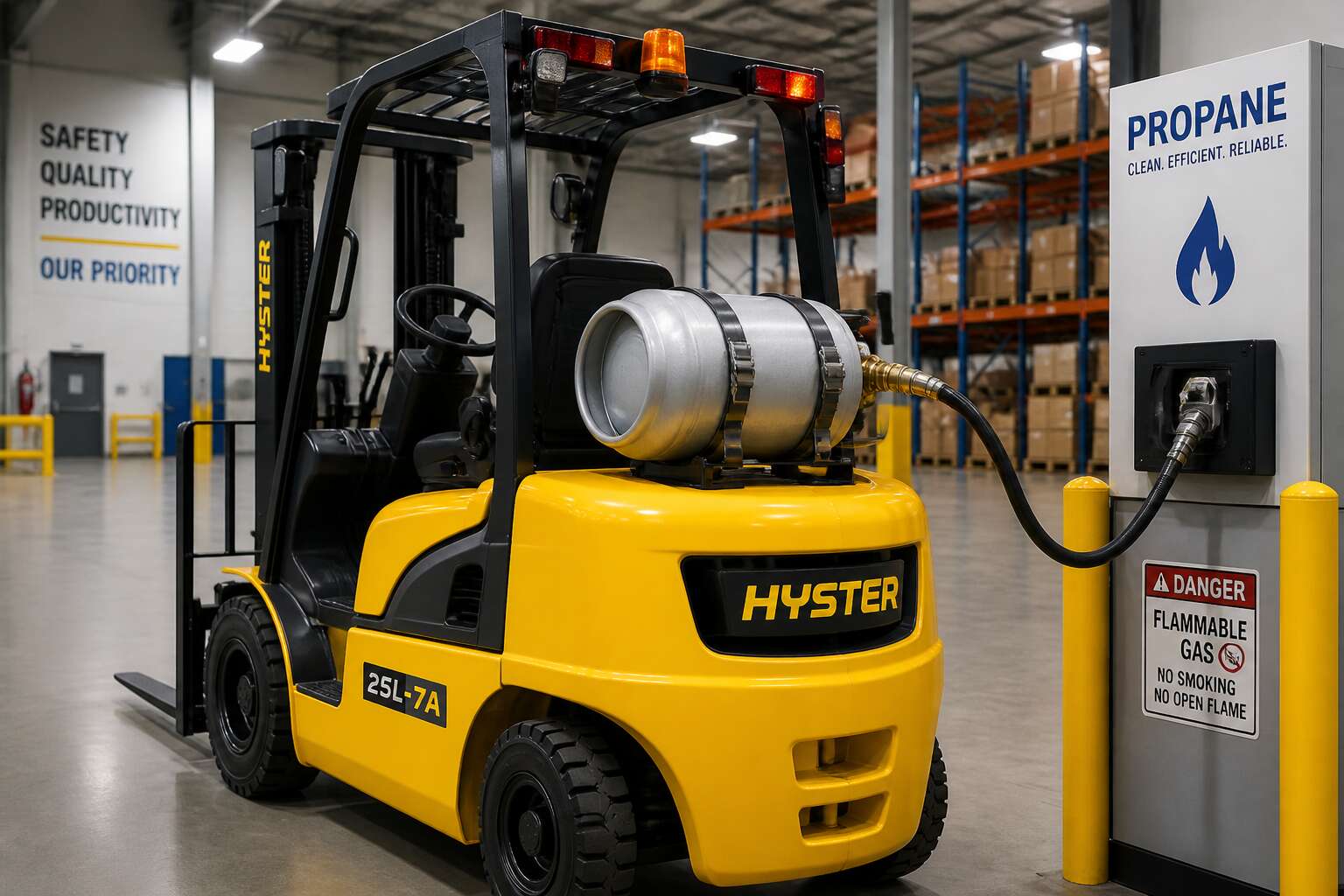
Evaluating Propane as a Primary Fuel Source
Comparing Propane to Electric and Diesel Models
Propane often gets overlooked in fleet planning conversations, yet it offers a distinct middle path. When evaluating propane as a primary fuel source, warehouse managers in South Africa face a decision that shapes every shift. I have watched operations halve their downtime by making this switch. The differences emerge in daily practice:
- Propane tanks refill in under two minutes, keeping trucks moving through peak periods.
- Electric units require charging windows and battery swapping downtime.
- Diesel delivers raw power but adds exhaust fumes and noise indoors.
A dependable forklift gas supply chain, whether from local depots or mobile refillers, determines whether propane stays viable. The fuel’s clean burn and instant cold weather starts make it a compelling option for mixed indoor and outdoor work. Electric models suit predictable schedules, while diesel remains a niche choice for heavy outdoor sites.
Understanding BTU Ratings and Engine Performance
Every litre of propane carries a fixed energy ledger, measured in BTUs, that dictates a forklift’s lifting capacity. The standard HD-5 blend used across South Africa delivers roughly 2,500 BTUs per cubic foot. Altitude complicates matters. Highveld operations breathe thinner air, leaning out the mixture unless the carburettor compensates. Engine performance becomes a negotiation between vapour pressure, ambient temperature, and the propane batch in the tank.
A dependable forklift gas supply must deliver consistent vapour quality, batch after batch. Winter blends with elevated butane content suppress BTU output by three to five percent, producing rough idling and sluggish lifts. Even a solid forklift gas supply cannot erase the seasonal chemistry of propane.
Consider what truly reaches the cylinder head!
- Vapour draw versus liquid draw configurations
- Regulator frost buildup in long shifts
- The calorific value of each propane delivery
These factors determine whether a truck performs at rated capacity or falls short under load.
Environmental Benefits of Clean-Burning Propane
Propane is three carbon atoms and eight hydrogen atoms. Burn it completely and the exhaust is mostly water vapour and carbon dioxide. No benzene rings. No sulphur compounds. No sticky residue coating the engine bay. That chemical simplicity makes it a defensible choice for indoor warehouses where operators breathe the same air.
A dependable forklift gas supply preserves this cleanliness. Every cylinder arrives with the same vapour quality, the same dryness, the same absence of heavier hydrocarbons. The benefits show up where it matters:
- Carbon monoxide output roughly 40% below petrol engines
- No liquid spillage during refuelling, transfer happens under sealed pressure
- Reduced ventilation requirements on confined loading docks
Mercaptan, the sulphur additive that gives propane its smell, is the only noticeable odour. Most operators stop registering it after a short exposure. The environmental ledger, however, favours propane.
Regulatory Incentives for Propane-Powered Fleets
Evaluating propane as a primary fuel source means looking past the tank strapped to the back. The real question is whether your operation can afford the uncertainty of diesel price spikes or the downtime of electric charging bays. Propane behaves predictably in high-throughput environments. The maths changes when you factor in forklift gas supply reliability, because a cylinder shortage can halt an entire shift.
Regulatory incentives for propane-powered fleets are not theoretical. The South African government has signalled clearer policy around cleaner alternative fuels, which translates into tangible rebates for qualifying fleets. Operators who switch early often access these sops before the waiting lists stretch into months. A solid forklift gas supply contract benefits from these subsidies:
- Reduced fuel levy on propane used for material handling.
- Accelerated depreciation allowances on converted units.
Add a low-carbon fuel levy exemption and the payback period shortens considerably.
Assessing Cold-Weather Starting and Power Stability
A Highveld winter exposes the difference between a machine that merely runs and one that earns its keep. Diesel engines grumble through cold starts, electric units lose range as temperatures fall, but propane vaporises cleanly below freezing. The chemistry of LPG ensures immediate ignition and a steady burn, which translates into predictable power delivery when you need to lift a heavy load at 06h00. This consistency matters more than peak horsepower figures, because real productivity is measured in repeated, reliable cycles.
Propane’s octane rating, typically over 104, resists pre-ignition under load. This means the engine maintains torque without the knocking that shortens component life. The vapour withdrawal system also protects the fuel line from liquid lock, a common failure point in cold weather.
– Consistent BTU output per cubic metre, regardless of ambient temperature
– No fuel gelling or waxing, unlike diesel in frost conditions
– Instant throttle response, reducing operator fatigue on tight shifts
The real test of any forklift gas supply is how it performs across a full shift, not just at the start. A dependable supplier ensures the cylinders arrive full and the gas composition meets South African standards, which prevents the dreaded mid-shift power fade. When the afternoon thunderstorm hits and the temperature drops ten degrees, that stability keeps your operation moving while competitors wait for their electric chargers to catch up.
Selecting the Right Cylinder Size and Configuration
Standard 20 lb and 33 lb Cylinder Options
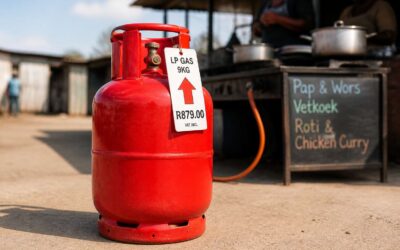
A standard 20 lb cylinder holds roughly 4.7 gallons of propane. That sounds like plenty until you run a triple shift. The 33 lb cylinder holds about 7.8 gallons, extending runtime for fleets running multiple shifts. For light duty cycles and tight spaces, the smaller tank remains a practical choice.
We see many operators underestimate their consumption rates. That mistake costs them productive hours! When planning your forklift gas supply, match the cylinder configuration to your equipment’s mounting system. Some forklifts use vertical tanks, others use horizontal. Check your model’s specifications before committing.
Common configurations include:
- Vertical cylinders for counterbalance forklifts
- Horizontal cylinders for low clearance environments
- Quick connect fittings for fast changeovers
The right choice balances runtime, weight, and safety.
Determining Fuel Consumption Based on Duty Cycle
Determining fuel consumption starts with your duty cycle. Count the hours each forklift runs, the loads it carries, and the terrain it crosses. A heavy cycle burns propane faster than light warehouse work. Track this over a week to see the real usage. That number guides your forklift gas supply.
Select the cylinder configuration to match that pattern. I’ve seen fleets lose hours because they guessed. Vertical tanks work for counterbalance models. Horizontal options suit low clearance environments. Quick connect fittings cut changeover time.
- Calculate average daily runtime
- Measure load intensity
- Test a smaller cylinder first
Verify your mounting system before buying. Proper sizing prevents those mid-shift fuel shortages!
Quick-Connect vs. Permanent Mount Systems
Many operators notice the cylinder only when it runs dry. That is a costly way to run a warehouse. Cylinder size and configuration are design choices. A vertical tank keeps the centre of gravity low for counterbalance trucks. A horizontal option clears low racking. The right mount system makes changeovers quick, the wrong one costs shifts. Your forklift gas supply depends entirely on this pairing. Quick-connect fittings suit high-turnover fleets. Permanent mount systems add tamper resistance but slow swaps. Some fleets standardise on one type to simplify training.
Common combinations follow a few patterns.
- Vertical cylinders for stability
- Horizontal cylinders for low clearance
- Quick-connect for fast changeovers
- Permanent mounts for security
Sizing protects against mid-shift shortages. That is the difference between a full shift and an unplanned break!
Handling and Transport Best Practices
A single miscalculated cylinder size can stop a warehouse cold. Selecting the correct configuration requires measuring the lift truck’s compartment and facility clearances before you commit. Vertical tanks counterbalance heavier loads, while horizontal units slide under low racking. Your forklift gas supply thrives when the cylinder matches the vehicle’s weight distribution and manoeuvring paths.
Handle cylinders with deliberate care. Use a dedicated trolley or cage, secure the tank with a chain, and inspect the valve before every coupling.
– Never drag cylinders across concrete; use a hand truck.
– Store cylinders upright and chocked when not in use.
– Confirm the O-ring seal is intact after each changeover.
Transporting tanks in an open vehicle requires proper ventilation and clear signage. A consistent handling routine reduces valve damage and extends tank life. That routine is the quiet hero of any fleet.
Matching Cylinder Racks to Your Facility Layout
Forklift gas supply begins with a tape measure. Measure the lift truck’s compartment depth and width before choosing a vertical or horizontal cylinder. Vertical tanks add counterbalance for heavier loads, while horizontal units fit under low racking. Check door heights and aisle clearances too.
Matching cylinder racks to your facility layout requires walking the floor. Place racks near charging stations but away from busy crossings. Verify the rack’s cradle fits the cylinder base and that the floor bears the weight.
- Inspect valve orientation for easy coupling access.
- Anchor racks securely and keep paths open.
Arrange everything so operators never twist or strain. A well planned layout reduces wear on tanks and equipment. That care keeps supply reliable across every shift.
Understanding Tare Weight and Fill Level Indicators
Selecting the right cylinder size goes beyond lifting capacity. Tare weight, the empty cylinder’s mass, tells you exactly how much fuel remains when you check the fill level indicator. Most forklift operators underestimate how much a full tank weighs versus an empty one. That confusion leads to half-loaded trucks or unnecessary downtime.
Here is a quick guide to matching sizes with duty cycles:
– Small warehouses with intermittent use: standard 20 kg cylinders.
– Continuous shifts or heavy loads: 33 kg or twin-valve configurations.
Always verify the tare weight stamped on the collar. A fill level indicator shows the liquid line, not the pressure. That distinction matters in hot South African summers, where vapor pressure rises. Choose a configuration based on your reach stacker’s footprint, not just runtime. A shorter, wider cylinder fits low-clearance compartments without sacrificing gas supply. Pairing the correct tare weight with reliable fill metrics keeps your forklift gas supply steady from first shift to last.
Building a Reliable Fuel Storage and Exchange Strategy
On-Site Storage Requirements and Fire Codes
One stack of cylinders stored too close to a doorway can shutter an entire warehouse. South African fire codes, enforced through SANS 10019, demand precise separation distances and ventilation for stored propane.
The layout matters. Cylinder cages must sit away from drains and building openings. Full and empty cylinders need clear segregation. Ventilation louvers at floor level keep propane from pooling. Fire-rated walls and a weatherproof roof prevent rust and external heat sources.
Your forklift gas supply stays reliable when storage areas are orderly and compliant. Inspectors consistently check for:
– Cylinders secured with chains or straps
– Warning signage prohibiting ignition sources
– No storage near forklift travel lanes
– Functional fire extinguishers within easy reach
Build your forklift gas supply around these principles and you eliminate the most common failure points in fuel management.
Exchange Programs vs. Refillable Cylinders
Swapping cylinders often beats managing a refill station. I have seen exchange programs offer predictable pricing and shift maintenance liability to the supplier. Refillable cylinders give you control over gas quality and let you track consumption per forklift. The right choice depends on fleet size and daily usage.
Compare these paths:
- Exchange cylinders arrive pre-filled and certified
- Refillables need trained staff and a dedicated area
- Exchange reduces downtime during peak shifts
- Refillables lower per-kilogram costs for heavy fleets
A reliable forklift gas supply strategy can blend both approaches. Use exchange for seasonal surges and refillables for steady baseline demand. That flexibility keeps operations moving without overcomplicating fuel management!
Managing Spare Inventory with Multiple Lift Trucks
Spare inventory is where most forklift gas supply plans break down. A fleet of six trucks running double shifts in Gauteng can empty twenty cylinders in a single week. If you keep only one spare per truck, you are already behind before the shift starts.
The exchange process runs on a schedule. Full cylinders go out, empty ones come back. The schedule defines how much spare stock you need.
- Full cylinders rotated on a first-in, first-out basis
- Empty cylinders counted before every delivery
- Exchange dates marked on each unit
Multiple lift trucks multiply the margin for error. One missing record leaves a driver without fuel mid-shift. The forklift gas supply chain only works when spare stock matches the daily consumption pattern.
Scheduling Delivery Windows Around Operational Peaks
Delivery timing shapes the fuel flow. Most warehouses in South Africa run on predictable rhythms: the early dispatch surge, the mid-morning lull, the afternoon restock wave. Scheduling cylinder exchanges to land inside those quiet gaps keeps the dock clear. A forklift gas supply delivery at 09:30, after the morning rush has cleared, can be processed without blocking trailers. A delivery at 07:15 creates a chain reaction of delays.
A sturdy storage strategy creates buffer in this cycle. Staging zones that separate full units from returns, clear exchange dates, and a rotation system that matches delivery windows to shift patterns keep the operation predictable. When the forklift gas supply schedule aligns with operational peaks, fuel becomes a background function.
The daily operating rhythm typically includes:
- A morning surge between 06:00 and 08:00
- A mid-shift lull between 10:00 and 11:30
- An afternoon peak after 14:00
- A second lull before the night handover
Coordinating with dispatch on these windows keeps the gas flowing.
Investing in Automated Pool Monitors and Audits
Warehouse floors hold secrets. The loudest one? The hiss of a leaking cylinder at 2:00 AM, bleeding your profit margins into the dark. A reliable forklift gas supply strategy is not born from hope. It is built on a deliberate, almost paranoid, attention to detail. Your staging area is the first line of defence, a quiet fortress where full units wait and returns are quarantined for inspection. This separation is the foundation upon which all else is built.
The protocol must be simple enough to survive a busy shift. You need a system that does not depend on the memory of a single, tired employee.
– Label every rack position with its expected cylinder size and tare weight.
– Log the date of receipt on the valve guard in permanent marker.
– Inspect each returned unit for damage, leaks, and compliance before it enters the queue.
A messy cage is a leaky cage. Without these checks, you are playing roulette with your fleet’s uptime.
The next layer of defence is technology. Automated pool monitors are not a luxury, they are the silent sentinels of your operation. They track the exact weight and telemetry of every cylinder in your forklift gas supply inventory. This data strips away guesswork. You see, in real time, which units are low, which are full, and which have not moved in weeks. This intelligence allows you to right-size your pool. You stop overpaying for rental units and eliminate the panic of a sudden, unexpected shortage.
These systems also feed directly into the audit trail. The daily, manual check of fill levels is a dying art. Replaced by a relentless stream of digital data. This is not just about convenience. The data reveals usage patterns you did not know existed. A spike in consumption on a Tuesday afternoon might signal a struggling engine, not a harder workload. The monitor gives you the evidence. The audit turns that evidence into a decisive action, protecting your bottom line from the silent killers of inefficiency and waste. The ghost in the machine is finally caught on camera.
Partnering with a Fuel Provider That Aligns With Your Operations
Questions to Ask Prospective Fuel Vendors
Choosing the right fuel vendor often matters more than the equipment itself. A supplier who understands your daily rhythm becomes an extension of your operations. If they cannot commit to precise delivery windows, your crew loses productive hours waiting for a truck. This partnership should remove friction, not add it.
Reliability is not a commodity. When evaluating providers, ask direct questions about their replenishment strategies. Can they manage your specific usage patterns without constant supervision? Their answer reveals whether they view you as a contract or a relationship.
Consider these points when interviewing prospective vendors:
1. What is their protocol for emergency refills outside of standard business hours?
2. How do they handle peak season demand spikes before they become critical shortages?
3. Do they offer telemetry or remote monitoring to track your tank levels proactively?
4. What contingency plans exist if their primary delivery vehicle breaks down?
Your facility cannot afford to shut down because of a logistical gap. The vendor’s internal processes must align with your operational peaks. Ask about their average delivery lead time for your location and how they prioritize competing customers. A provider who can articulate their response plan shows more competence than one who promises the world without a strategy.
The true cost of a cylinder goes beyond the product inside it. It includes the administrative burden of managing invoices, scheduling, and safety compliance. A quality partner will streamline those backend tasks. Their transparency regarding pricing structures and additional fees will save you from unpleasant surprises later. Remember that your forklift gas supply is only as strong as the weakest link in the chain from their depot to your cylinder valve.
Evaluating Delivery Lead Times and Emergency Support
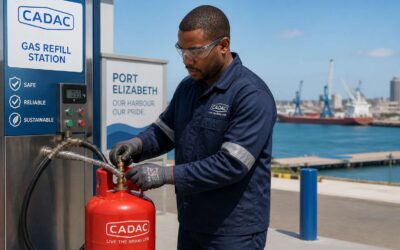
Your forklift gas supply only performs when the delivery chain behind it performs. A provider that aligns with your operations sees lead times as a promise, not a suggestion. In South Africa, where distances between depots and facilities can be vast, emergency support becomes critical.
When evaluating a partner, study how they respond when a delivery slips. I have seen warehouses lose an entire shift waiting for a delivery promised for 7 AM that arrived at noon. That gap is not a scheduling hiccup; it is a failure of alignment. Their answers define your uptime.
Consider these points when assessing emergency readiness:
- Is there a dedicated after-hours line for urgent refills?
- Can they dispatch a technician if a valve fails on site?
- Have they mapped your location against delivery zones for true travel time?
Providers who answer with specifics understand that your peak demands require their fastest responses. The consistency of your operations depends on their ability to match it.
Understanding Pricing Models: Per-Gallon vs. Flat Fees
A quoted price per gallon looks transparent, but the meter on the truck may tell a different story. Flat fees offer predictability, yet they can mask inefficiencies. The right forklift gas supply agreement matches the pricing structure to your actual duty cycle, not a theoretical average. Per gallon pricing rewards disciplined usage, while flat fees suit operations with steady consumption. Ask for a breakdown of both models before signing.
- Does the per gallon price include delivery and environmental charges?
- Is the flat fee recalculated if your fleet expands mid contract?
Providers who cannot answer those questions directly are hiding margin somewhere. Your forklift gas supply should cost what it costs, no more. Pricing clarity is the foundation of a partnership that keeps racks full and shifts moving.
Checking Safety Compliance and Industry Certifications
Choosing a partner for your forklift gas supply starts with verifying their safety credentials. A reputable provider will display compliance with South African regulations and industry standards. Ask about their cylinder testing intervals and operator training. The right forklift gas supply partner treats safety as a continuous commitment, not a checkbox. Look for providers who document everything.
- Check for valid gas installations certificates
- Confirm staff hold current handling qualifications
- Review their incident response record
When a supplier’s forklift gas supply process meets certification requirements, your operation gains stability. Their compliance protects your people, your equipment, and your shift schedule. That kind of reliability is worth more than the lowest quote on paper.
Reviewing Contract Flexibility and Volume Discounts
The demands of your shift change from week to week. A rigid supplier agreement can become a burden when order volume spikes. That is why reviewing contract flexibility matters before you commit. Your forklift gas supply should align with your actual operating pattern, not a rough estimate drawn from last year’s invoice.
Volume discounts reward operators who plan ahead. Suppliers often offer tiered pricing when you consolidate sites or guarantee a monthly minimum. I have seen businesses reduce their fuel spend meaningfully through this approach. Ask about seasonal adjustments and the cost of changing order sizes mid-cycle.
– Minimum order quantities that match your storage capacity
– Delivery slots scheduled around your peak shifts
– Price review windows every six months
These clauses turn a simple forklift gas supply agreement into a working part of your logistics. Rigidity costs money. Flexibility keeps your operation moving.
Cost-Saving Tactics for Long-Term Fleet Operation
Calculating Total Cost of Ownership Across Fuel Systems
Many fleet operators fall in love with a fuel system’s sticker price, only to find that the ledger tells a different story after five years. In South Africa, where energy tariffs swing and exchange rates press on every import, total cost of ownership becomes the only honest metric. The real arithmetic includes depreciation, maintenance intervals, operator productivity, and the hidden weight of downtime.
Consider how your energy choice behaves under load. Electric forklifts require charging infrastructure and battery rotation, while diesel demands exhaust filtration and noise management. Propane sits between them, often with lower maintenance frequency and predictable cold starting, but the supply chain must be steady.
Your forklift gas supply contract can also hide costs:
- Delivery fees buried in per-gallon rates
- Penalties for low usage or seasonal failure to order
- Safety compliance costs tied to untrained staff
Audit these against a five year horizon. The cheapest quote is usually an incomplete promise. A resilient forklift gas supply strategy should be treated as an asset, not an expense.
Optimizing Routes and Idle Times to Reduce Consumption
Route planning directly affects your forklift gas supply usage. Shortening travel paths and grouping tasks by zone reduces unnecessary engine runtime and keeps cylinders working longer.
Idle time wastes fuel without moving a pallet. A forklift left running while a driver waits for a pick list burns gas needlessly. Switching off during delays cuts consumption meaningfully. For larger fleets, small changes compound.
- Map high traffic zones to reduce backtracking
- Consolidate trips to the same storage area
- Set clear idling rules for every operator
These measures require no new machinery. They require attention to daily habits, the most practical starting point in any operation.
Negotiating Multi-Year Agreements with Performance Clauses
Locking in a three year fuel agreement can shave 12 percent from your annual energy line, yet most fleet managers renew month to month out of habit. The real weight of a forklift gas supply contract shows in its performance clauses, not its base rate.
Consider what a delayed delivery costs when a warehouse aisle sits idle. Negotiate terms that shift that cost back to the supplier. Include these elements:
- Staggered delivery windows tied to your shift start times
- A published price formula linked to energy indexes, not vendor discretion
- Automatic compensation for any short filled cylinder
Performance clauses change a supplier into a partner. When the vendor’s revenue depends on your uptime, both sides prioritize reliability. Over a multi year term, shared consumption data reduces waste for everyone. Forklift gas supply contracts with clear metrics also make internal audits easier, since every invoice maps to an agreed service level. The saving compounds annually, quietly, without a single pallet moving differently.
Tracking Usage Data to Identify Burn Rate Anomalies
Every forklift operator knows the quiet panic when a cylinder runs dry at the far end of the warehouse. I have watched that panic turn into profit leaks because the usage logs stay closed. Tracking consumption per truck per shift reveals burn rate anomalies that point to leaking regulators, idling habits, or cylinders arriving underfilled.
Separate your fleet by model, age, and shift pattern. Compare weekly consumption against hours worked. A sudden spike in forklift gas supply for one unit usually means a poor connection or a driver who leaves the engine running during tea breaks.
- Verify tare weights on every exchange delivery.
- Flag short fills that distort your monthly totals.
- Record hour meter readings consistently.
Once the pattern emerges, adjust maintenance schedules or operator behaviour. That anomaly also strengthens your claim when negotiating with a forklift gas supply vendor. A measured discrepancy beats a guess.
Leveraging Bundled Service for Maintenance and Fuel
A quiet leak in any fleet budget is the disconnect between fuel ordering and maintenance scheduling. Bundling your forklift gas supply with preventive maintenance service creates a single point of accountability. One invoice, one provider, one monthly cost. This slashes admin and reveals inefficiencies. Consider these typical inclusions:
– Scheduled inspections aligned with cylinder exchanges
– Priority breakdown response
– Usage reports that show repair timing issues
When maintenance and fuel share a contract, the provider can spot worn regulators on your forklift gas supply more easily. They see fill history alongside repair logs. That data reduces emergency callouts and extends equipment life. South African fleets can often negotiate a consolidated rate that cuts total spend by 10 percent. Avoid managing fuel and repairs in separate silos. A bundled service turns a cost centre into a managed asset, giving you predictable budgeting and fewer surprises in the warehouse.
Safety Protocols and Compliance Standards
Proper Ventilation and Gas Detection Systems
Every warehouse faces hidden dangers. The forklift gas supply that powers your fleet produces carbon monoxide, an odorless threat that can accumulate in enclosed spaces. South African safety standards, including the Occupational Health and Safety Act, require proper ventilation. This is not optional equipment.
Gas detection systems provide additional protection. Strategically placed sensors monitor air quality in real time, alerting supervisors to leaks before they become emergencies. Routine calibration keeps these devices accurate. Compliance depends on both ventilation and detection.
A complete detection setup includes:
- sensors near loading docks and maintenance bays,
- audible and visual alarms at eye level,
- monthly sensitivity tests with annual recalibration.
Standard Operating Procedures for Cylinder Changes
Every warehouse manager knows the procedure, yet I have seen trained operators bypass it completely. The purging sequence is where most mistakes happen. When a cylinder runs dry, residual gas remains in the fuel line. Connecting a fresh tank without purging introduces air into the system, which causes hard starting and unstable combustion. The fix is simple: close the valve, disconnect the line, and bleed the system for five seconds before reattaching.
Standard operating procedures exist to eliminate these preventable failures. They cover inspection criteria, connection torque, and leak testing. When workers cut corners, the forklift gas supply becomes unpredictable. Equipment stutters, productivity drops, and the financial cost of damaged components mounts silently.
A reliable SOP for cylinder changes follows a strict sequence:
1. Verify the new cylinder’s tare weight and inspection date before lifting.
2. Remove the protective cap and inspect the valve for debris or damage.
3. Connect the quick-connect fitting hand tight, then tighten a quarter turn with a wrench.
4. Open the valve slowly and listen for hissing. Apply leak detection fluid to the connection.
5. Close the valve, bleed the line, and disconnect before returning the empty cylinder to the rack.
Each step matters. The forklift gas supply running through these systems demands respect. Routine retraining on these procedures, twice per year, keeps compliance standards alive. Documentation of each change, including time and operator name, provides the paper trail auditors expect during inspections.
Staff Training, Certification, and Refresher Courses
In South Africa, proving competence is not optional. A forklift gas supply system only performs as well as the person handling it. Certification rooted in current safety protocols turns routine work into reliable habit.
We see it in the field regularly. Refresher courses correct the quiet drift that sneaks into daily practice. When operators understand why compliance standards exist, they follow them with intent rather than obligation. That shift in attitude matters more than any inspection.
A solid training programme covers:
– Valve inspection before connection
– Leak detection after every changeover
– Correct shutdown when cylinders run dry
– Emergency response for gas odour
Refreshed skills keep the forklift gas supply moving without interruption. Compliance standards protect both the team and the equipment, and that keeps the operation productive.
Leak Prevention Methods and Emergency Response Plans
Statistics from the National Fire Protection Association indicate that roughly 15% of industrial gas incidents stem from undetected leaks in supply lines. That figure alone explains why robust safety protocols form the backbone of any dependable forklift gas supply operation.
Leak prevention starts with the physical connection. Every coupling, hose, and regulator deserves scrutiny before it carries fuel. A simple soapy water solution remains one of the most effective detection tools. Apply it to joints after each cylinder changeover. Bubbles reveal what the nose might miss, especially in busy warehouses where odour thresholds get overwhelmed by diesel exhaust or chemical fumes.
Emergency response plans cannot be theoretical documents gathering dust on a shelf. They require practical, rehearsed steps that every operator can execute without hesitation. When a gas odour presents itself, the immediate protocol involves:
- Shutting down the lift truck ignition without delay
- Closing the cylinder valve handwheel completely
- Moving the truck to a well-ventilated outdoor area
- Notifying the designated safety officer immediately
Compliance standards in South Africa demand more than good intentions. The Pressure Equipment Regulations and SANS codes provide the legal framework, but daily discipline gives them meaning. Regular audits of storage areas, inspection logs, and cylinder conditions keep the entire forklift gas supply chain accountable.
Leak prevention methods extend beyond the changeover moment. Cylinders themselves need valve caps secured whenever they are disconnected. Hoses require replacement at the first sign of cracking or perishing, not when they eventually fail. Threads and fittings must stay clean and free from debris, since foreign particles compromise the seal integrity.
Emergency preparedness also covers secondary risks. Fire extinguishers rated for gas fires should sit within arm’s reach of every cylinder storage point. Staff need to know the difference between a small leak that can be controlled and a major release that demands evacuation. Clear communication channels, from radio codes to designated assembly points, reduce chaos during those critical first minutes.
Documenting Inspections for Regulatory Audits
Documentation feels like the least urgent task until the auditor walks in. For a forklift gas supply business, inspection logs are the difference between a routine audit and a regulatory finding. South African regulations under the Pressure Equipment Regulations require a clear paper trail. Without it, even a flawless safety culture remains invisible.
Each entry should capture:
- Date and time of the cylinder inspection
- Condition of hoses, valves, and relief devices
- Name of the operator who performed the check
- Any corrective action taken, with follow-up dates
Consistency matters more than verbosity. Auditors look for gaps, and gaps in documentation erode confidence. When every cylinder’s history is traceable, compliance becomes a habit, not a scramble. Keep the record honest, and the record will protect you.

0 Comments